
Last updated September 20, 2026
Free on-site gate assessment - hinges, posts, and your LiftMaster or Nice gate operator checked before anything is quoted
The assessment is free and the quote is the invoice.
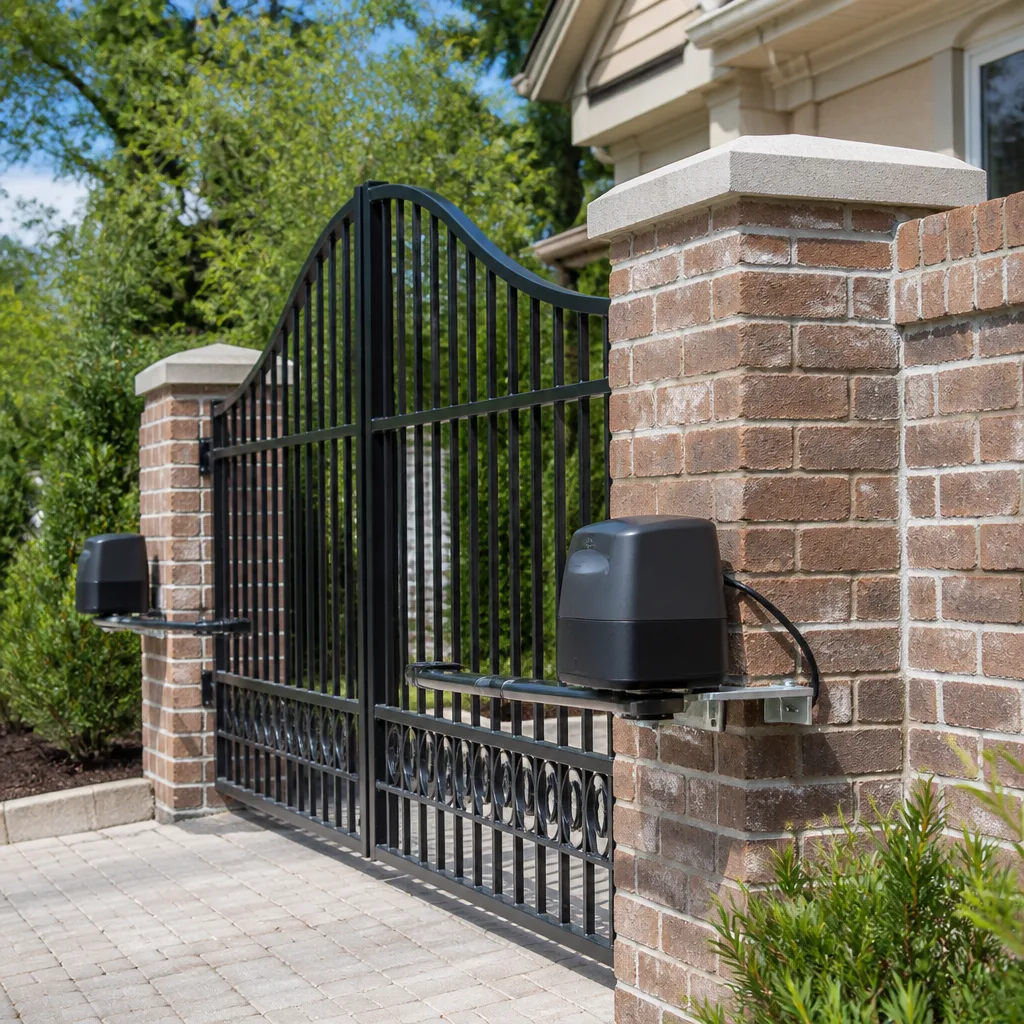
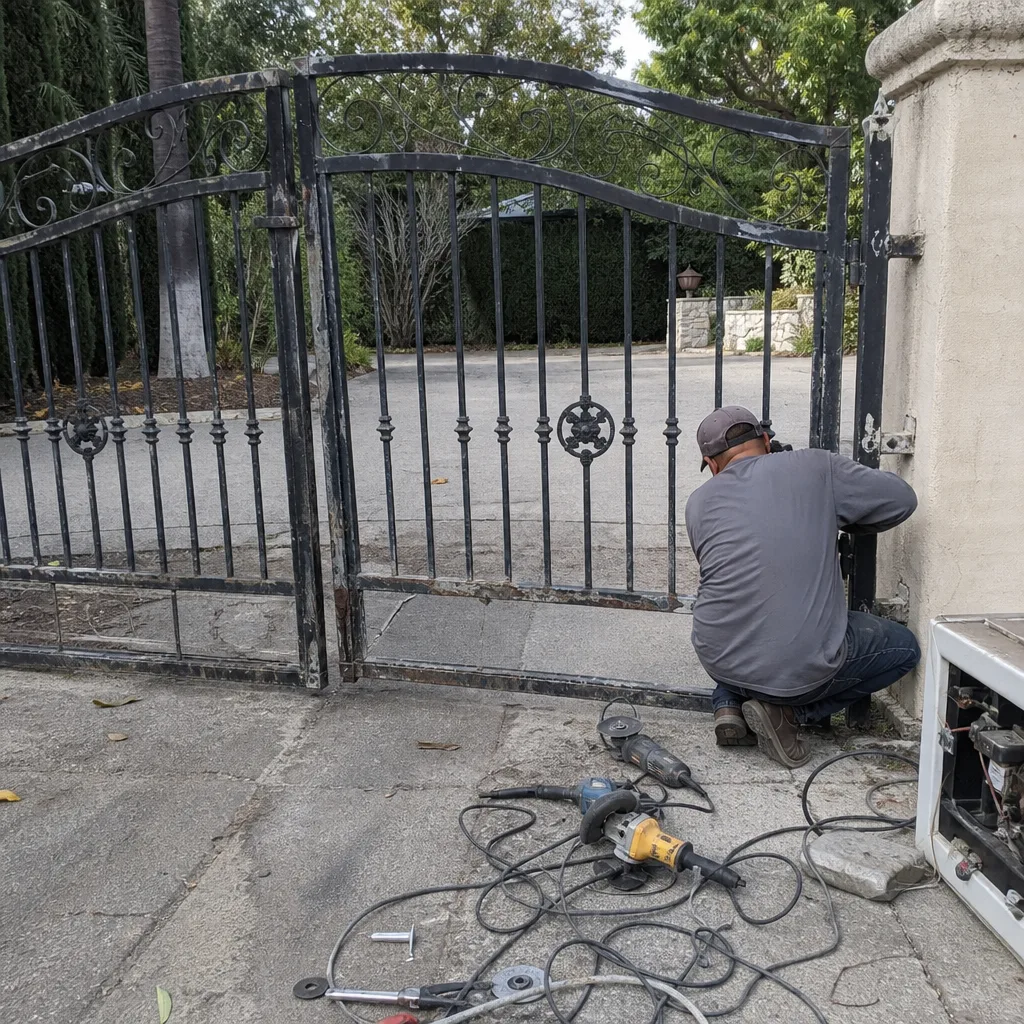 Before
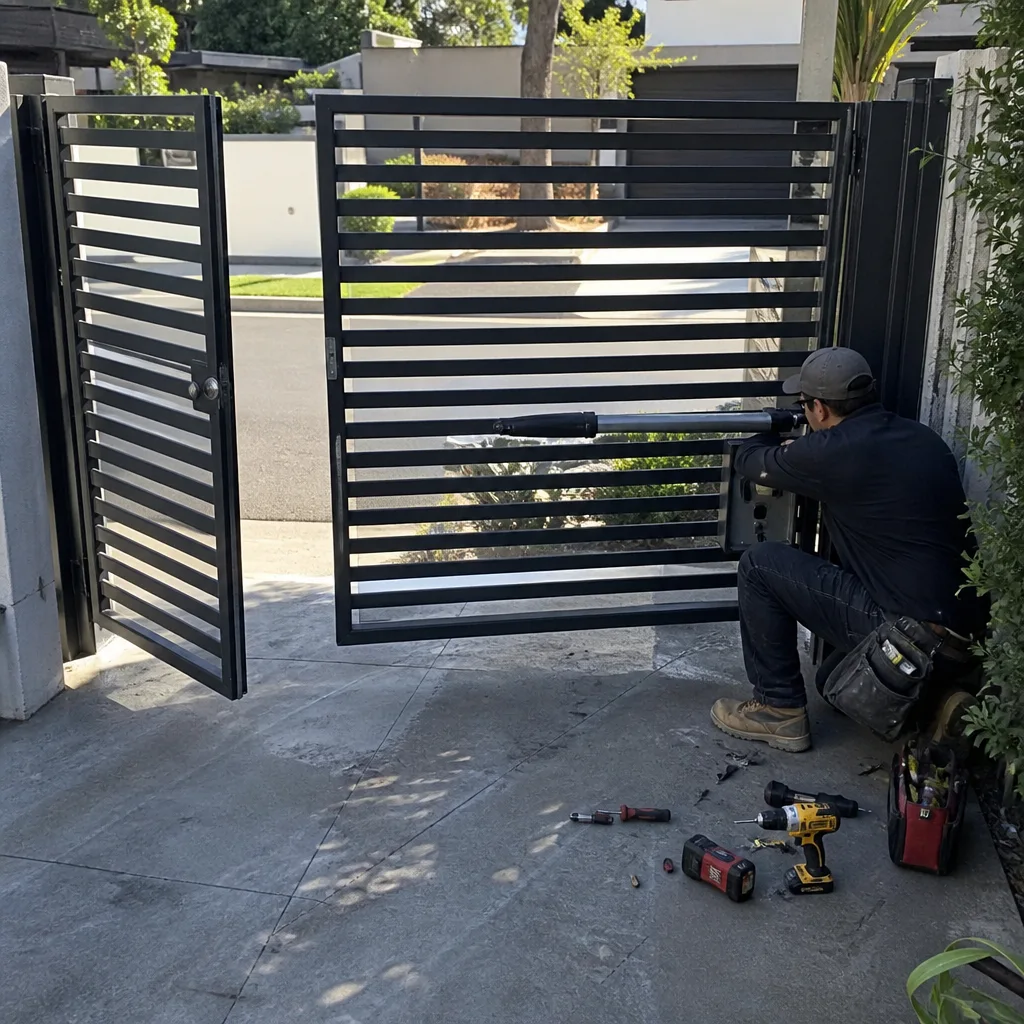 After
After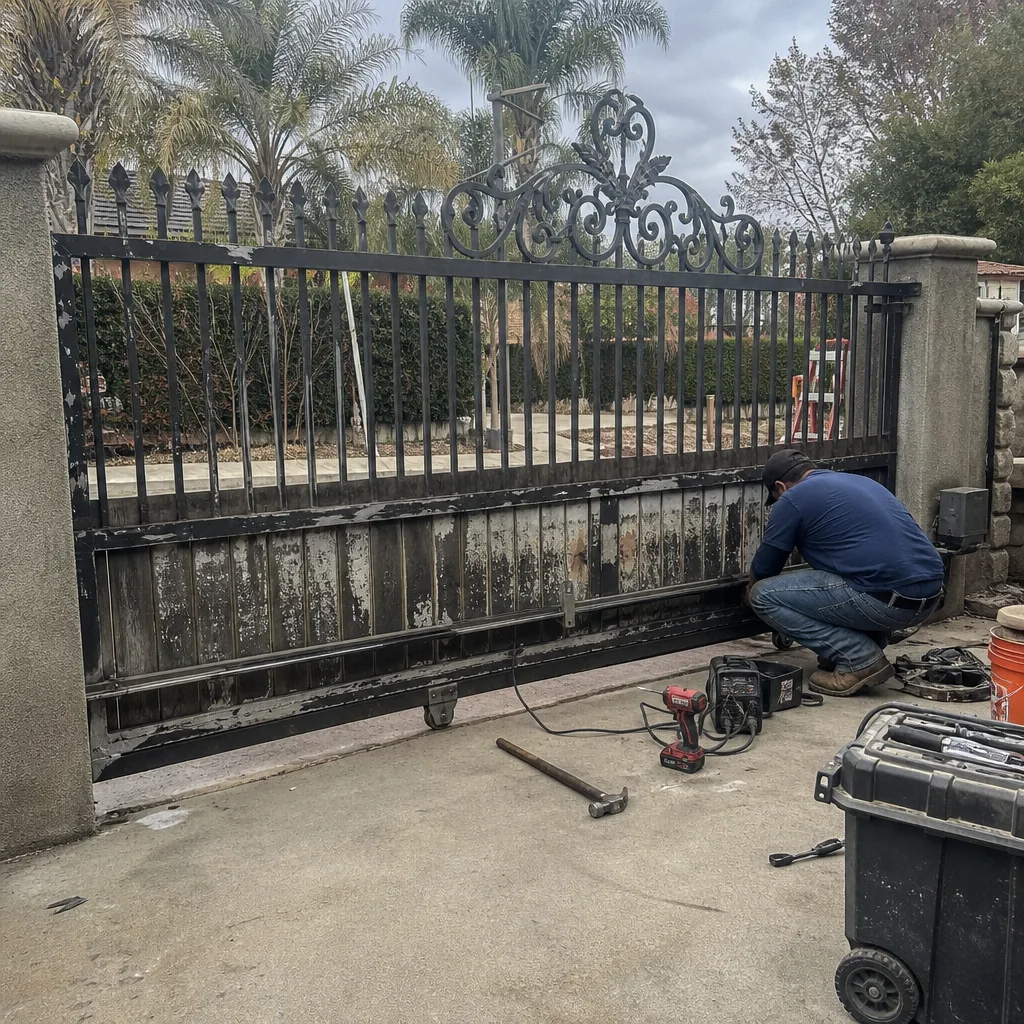 Before
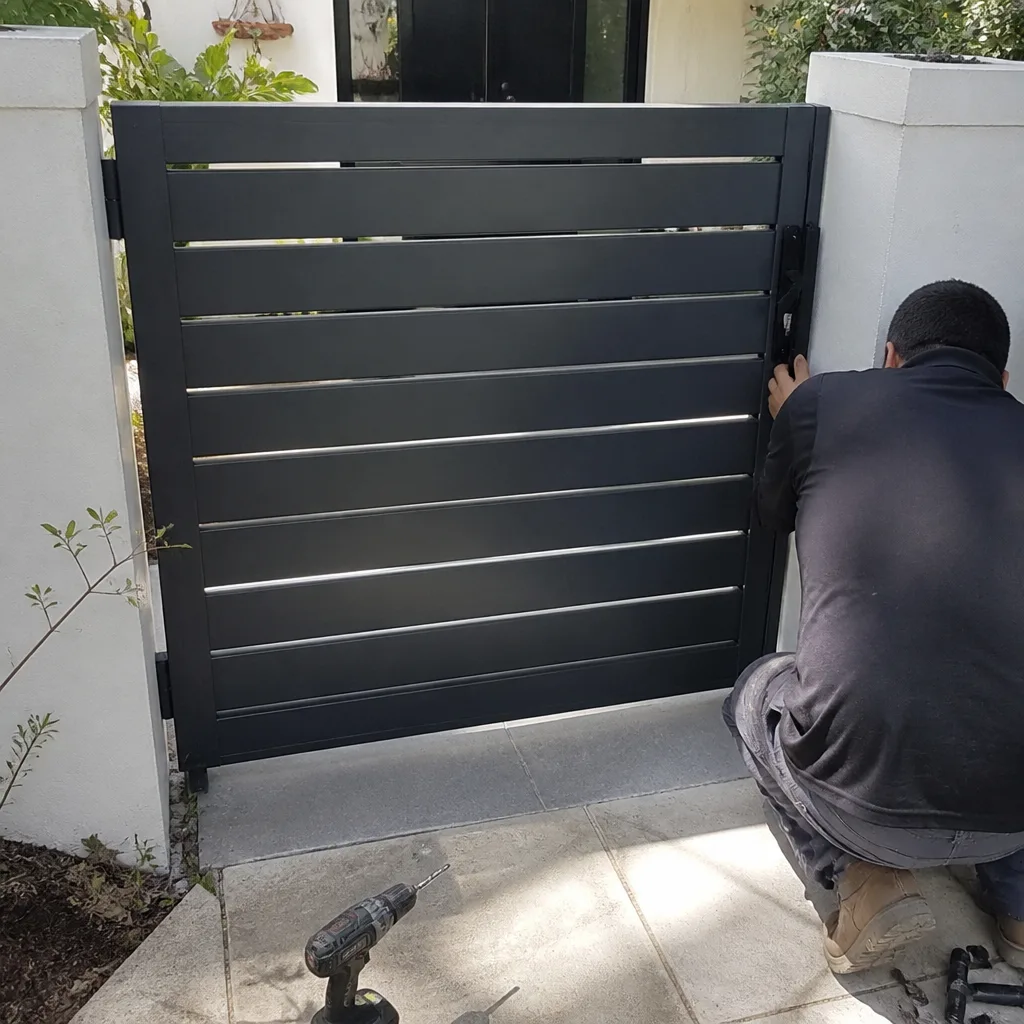 After
After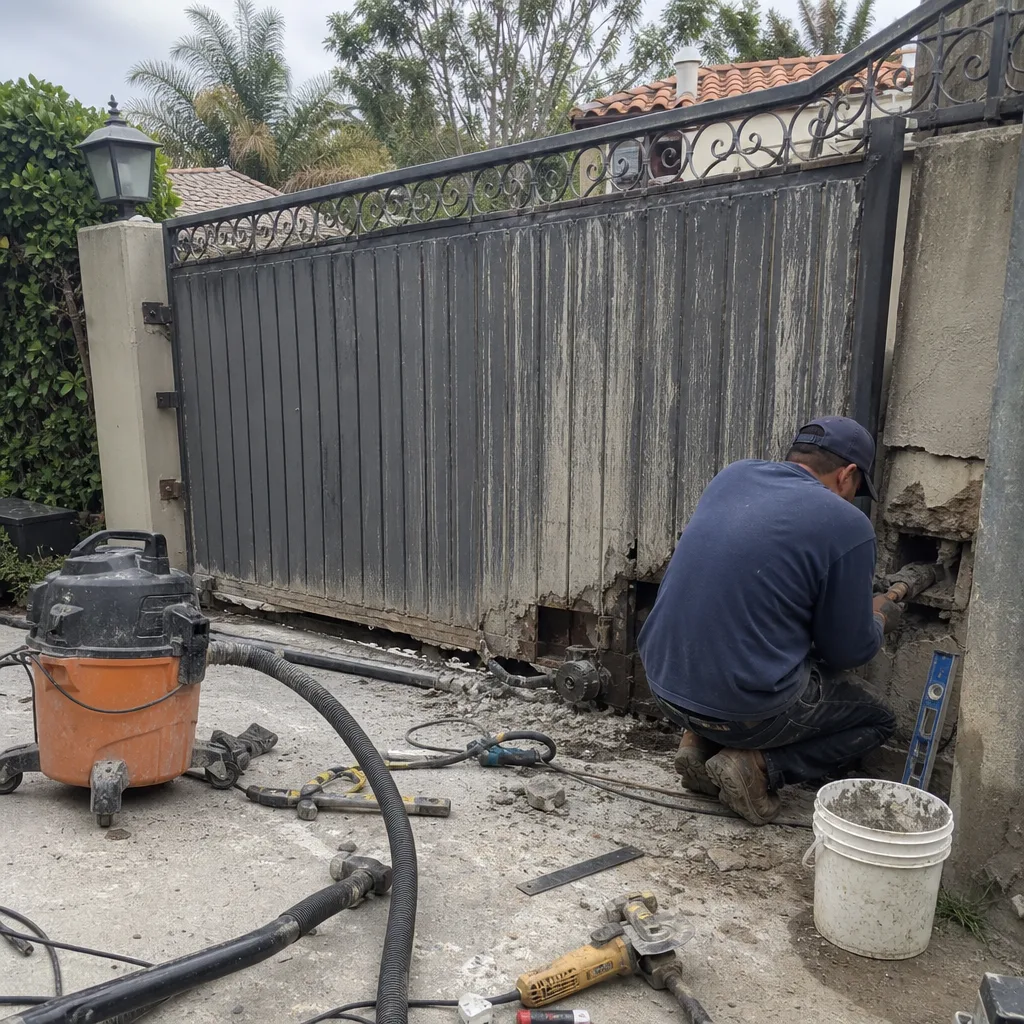 Before
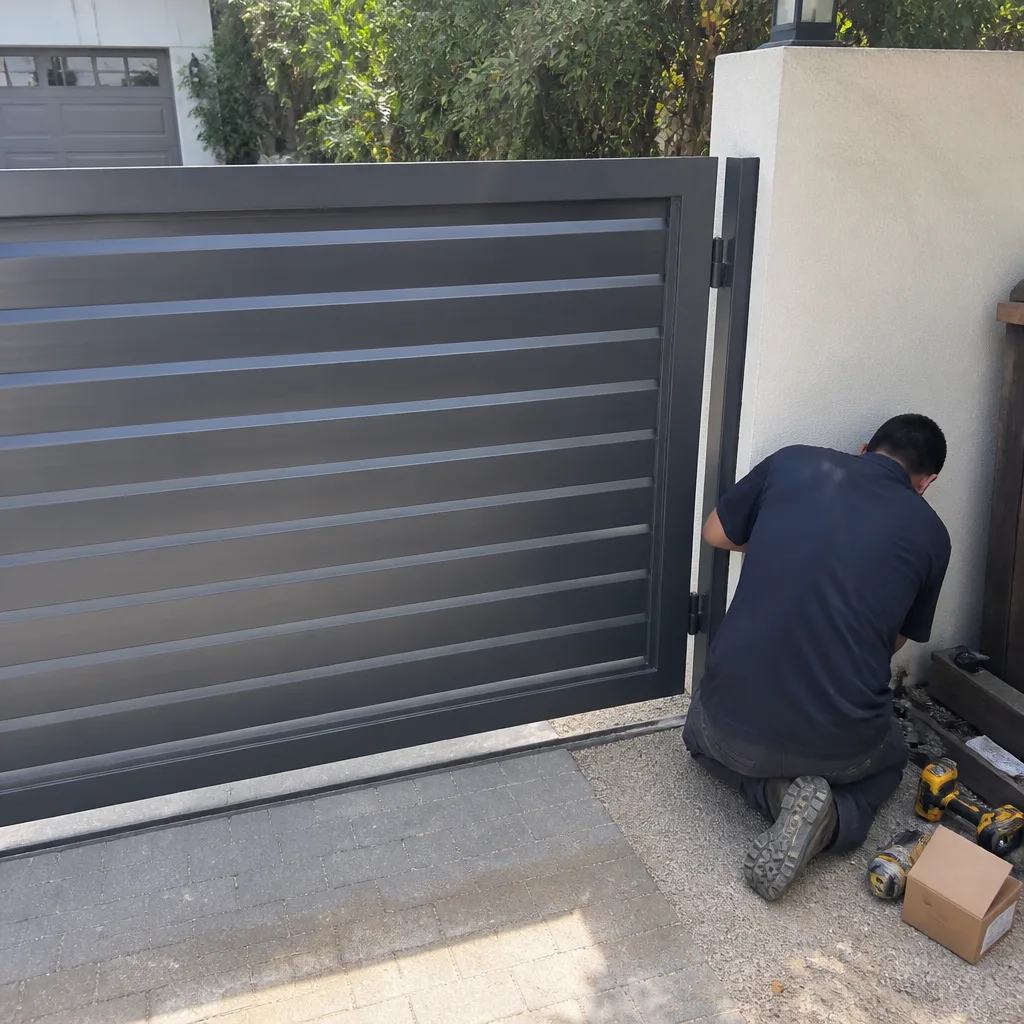 After
AfterSeasonal Gate Repair Care for Tarzana: Year-Round Homeowner’s Guide
A gate that works fine in February can fail in August not because anything broke suddenly, but because thermal expansion from 100°F San Fernando Valley heat slowly walked the limit switches out of position over three months of daily cycles. The failure wasn’t sudden. It was scheduled. This guide explains the three distinct stress periods that actually govern gate wear in Tarzana, which components each season attacks, and what a homeowner should check and log so a gate never gets the chance to fail by surprise, and when to handle issues themselves versus calling our Gate Repair services. You’ll come away with a working calendar, a simple documentation method, and a clear sense of what’s worth fixing yourself versus what belongs in a technician’s hands.
Quick Answer
Seasonal gate care in Tarzana means treating the year as three stress periods, not four seasons: summer heat (June through September) attacks control boards, wiring insulation, and limit-switch calibration; Santa Ana wind events (October through November) load hinges, frames, and cantilever rollers unevenly; and the winter rain window (December through March) targets ground-mounted operators, conduit entry points, and any bare steel. A homeowner should run a ten-minute visual and functional check at the start of each period, and after any wind event over 40 mph, then log what they observed with a photo. That log is what keeps a future repair from starting blind.
Table of Contents
- The Summer Heat Cycle: June Through September
- Santa Ana Wind Events: October Through November
- The Winter Rain Window: December Through March
- A Calendar-Based Action Schedule for Tarzana Homeowners
- How to Log Seasonal Inspections So a Future Technician Doesn’t Start Blind
- Common Mistakes to Avoid
- When to Call a Professional
- Frequently Asked Questions
- The Bottom Line
BeforeAfterThe Summer Heat Cycle: June Through September
Tarzana sits in a climate band where daytime highs cross 95°F routinely from June onward, and the surface temperature of a dark metal gate or an unshaded operator box can run 40 to 60 degrees hotter than the air. That heat does three specific things to gate systems, and none of them involve a dramatic failure. They involve slow drift, softened insulation, and a control board running at the edge of its rated temperature.
First, limit switches. A swing gate’s travel limit tells the motor where to stop. On most residential operators, that limit is set either mechanically or digitally. Thermal expansion adds length to the gate leaf and the arm bracket. Over a summer of daily cycles at 100°F plus, we’ve measured the same gate’s stop position walk by as much as three-quarters of an inch, which is enough to make a gate close hard against the post, bind on the latch, or reverse mid-cycle because the amperage sensor reads the bind as an obstruction. The switch didn’t break. The heat moved the gate out of the switch’s expected range.
Second, wiring insulation. Most residential gate wire is low-voltage, 16 or 18 gauge, run inside flexible conduit. The material degrades with heat over time, especially where the conduit is exposed to direct afternoon sun on a south-facing wall or runs along pavement. Once the jacket becomes brittle, the copper inside is one rock chip or one weed-trimmer pass away from a short. This shows up most often as intermittent behavior: a gate that works ten times, then trips the breaker, then works again. In our experience in Tarzana, intermittent shorts are the second most common summer service call after limit drift.
Third, control boards. Most residential boards are rated for 140°F or 158°F internal operation, but the plastic enclosures catch sunlight and trap heat. A board inside a sun-baked operator box on a 105°F day can reach its thermal ceiling by early afternoon. That’s when capacitor wear accelerates and when solder joints start developing micro-cracks. The board rarely dies that day. It loses a year of service life and starts behaving oddly: locking up, refusing to learn a remote, dropping memory.
What a Tarzana homeowner should do at the start of June:
- Run the gate through three full open-close cycles and listen. A hard close, a creak at the hinge, or a pause-then-continue is evidence of drift.
- Look at the operator enclosure and the conduit runs. If the box or the conduit is hot to the touch at 3 p.m., it needs shade or repositioning.
- Check the gate’s stop position against the latch. If the gate now hits the post before the latch seats, a limit adjustment is due.
- Photograph the control board through the enclosure window, if present, and note any darkening around the power terminals.
The season’s lesson: in Tarzana, heat is a calibration force. The motor doesn’t care about the temperature. The settings do.
Santa Ana Wind Events: October Through November
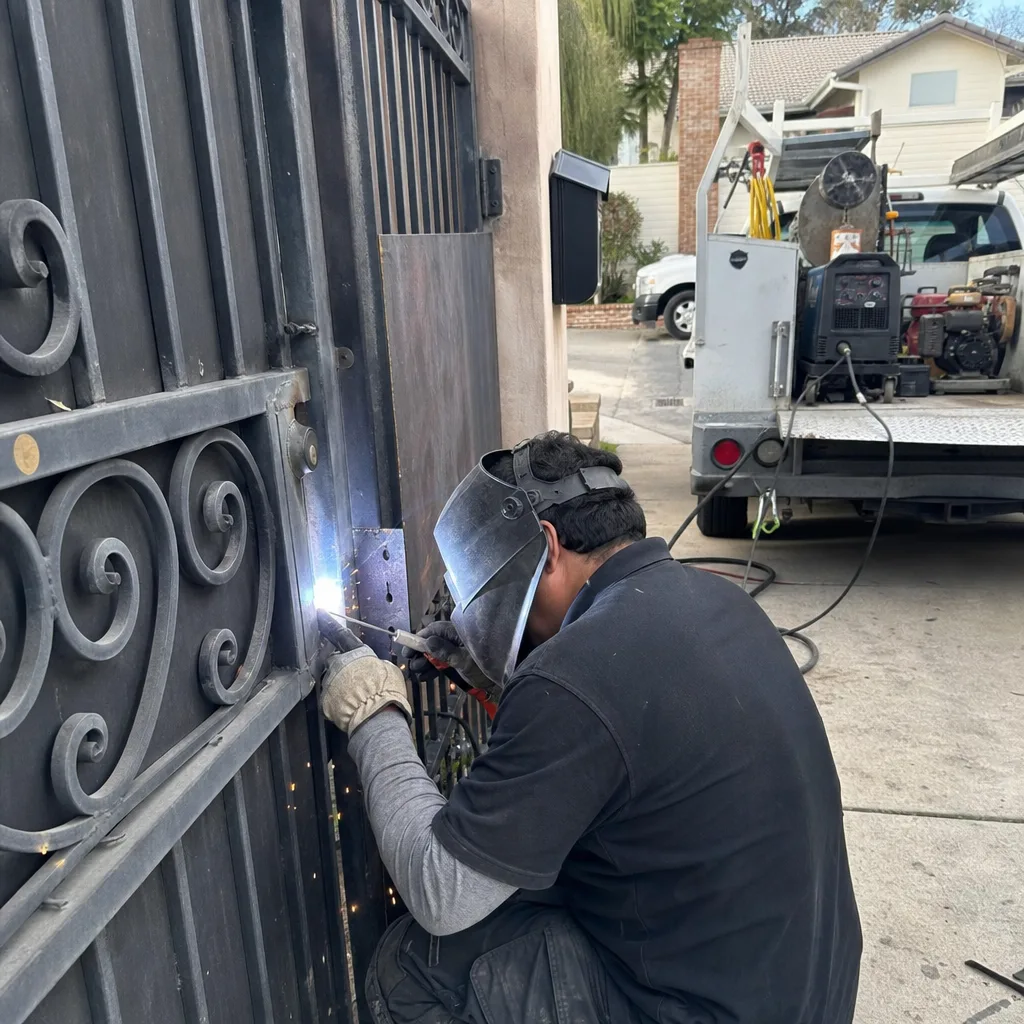
Santa Ana winds hit Tarzana from the northeast, dry and gusting, usually between October and November, with sustained speeds that regularly exceed 30 mph and gusts past 50. For a gate system, the damaging part isn’t the wind itself. It’s the cyclical loading: the wind pushes, the gate resists through its hinges or its rollers, the gust drops, the gate settles back. That cycle repeats hundreds of times per event, and it accelerates metal fatigue at exactly the points where the gate is fastened to anything.
The components most affected in Tarzana’s wind corridor are leaf hinges on swing gates, the saddle and rollers on cantilever and sliding gates, and the attachment points where an arm bracket or a rack meets the gate frame. Each gust applies a bending moment. Bolts that were torqued correctly in spring loosen a quarter-turn by November. Weld points that looked intact develop hairline cracks at the heat-affected zone. The gate still operates. That’s the trap. The damage accumulates quietly, and the failure shows up months later when a hinge boss tears out or a roller bearing seizes under load.
After any Santa Ana event with gusts over 40 mph, run these two checks:
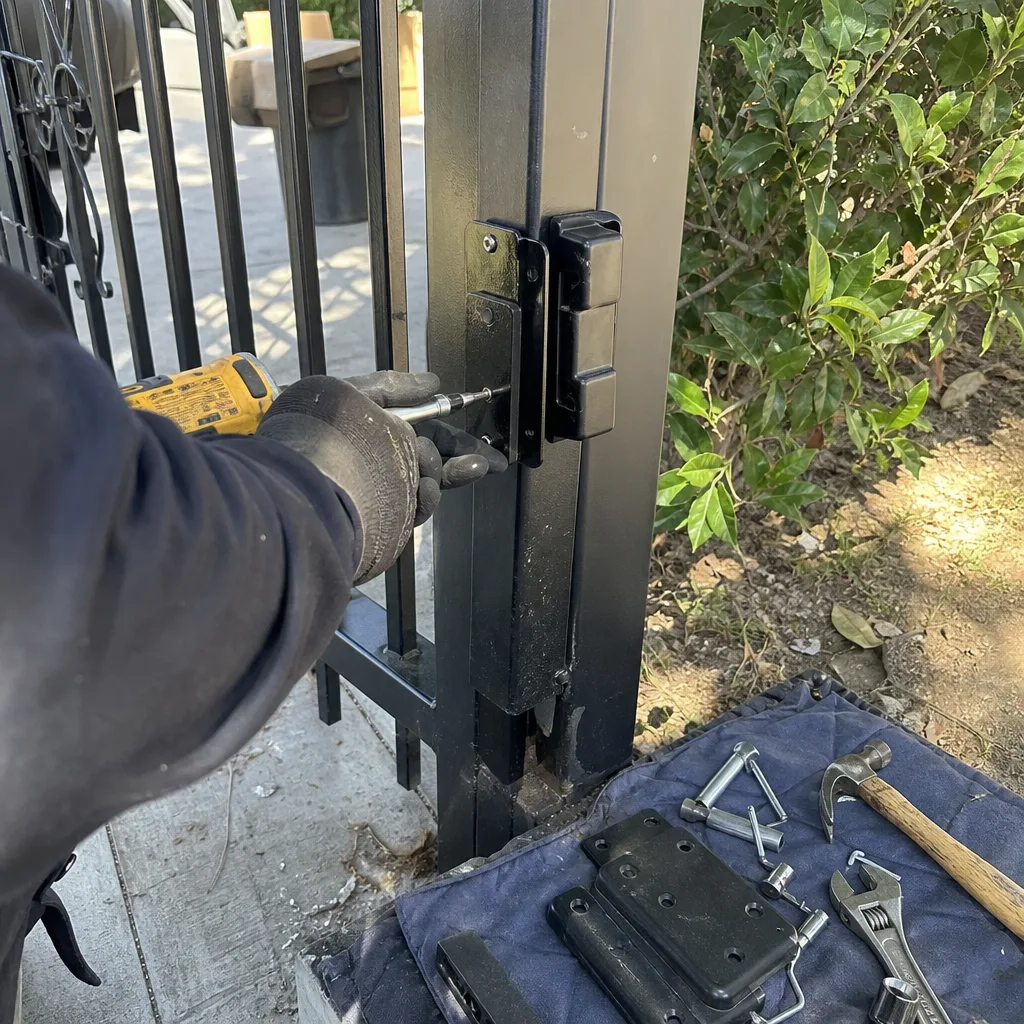
Check one: the hinge boss bolts and arm bracket. Put a wrench on the bolts that hold the gate leaf to the hinge and the arm to the operator. If any turns without effort, the gate has been working against loosened hardware. Retorquing now prevents the wallowing (ovalizing) of the mounting holes, which is what leads to a hinge replacement instead of a bolt tightening. If any bolt turns more than a half-turn, mark it with a paint dot so you can see next season whether it moved again.
Check two: the gate’s gravity hang and roll test. Disengage the operator, using the manual release, and swing or slide the gate by hand. It should move smoothly and hold position when released. A gate that has become harder to move, or that sags visibly, has a frame or hinge problem the operator has been compensating for by running at higher amperage. The operator’s amperage sensor is not a frame alignment tool. It’s a motor-protection circuit. When a gate starts tripping its entrapment system but a technician can’t find an obstruction, the cause is usually a wind-fatigued frame the operator has been fighting for weeks.
One more Tarzana-specific point: dry Santa Ana air also thickens any grease in exposed hinges and rollers with dust. A wipe-and-regrease after each major wind event is cheap insurance, and it keeps the mechanical wear from compounding the wind damage.
The Winter Rain Window: December Through March
Tarzana gets its rain in a December-to-March window, and for gate systems the danger isn’t the rain that falls on the gate. It’s the water that runs down the conduit, the splash that hits the operator base, and the pooled water that sits against the foundation. Valley homes with flat lots and plastered or masonry gate columns deal with these conditions differently than hillside homes with steeper drainage, but the failure mode is the same across both: water finds the lowest opening and sits there.
Ground-mounted operators are the first thing to watch. These are the arm-and-piston units bolted to a small concrete pad at the base of a swing gate. The pad was likely poured when the gate went in, and over the years soil and mulch have built up around it. That means the operator’s bottom edge now sits in a shallow bowl that holds water after rain. The motor’s internal seals can keep out occasional splash, but nothing keeps out water that rises over the lower vent or weeps down the arm shaft over weeks of alternating wet and dry weather. The symptom a homeowner sees is a gate that works okay in dry weather and then trips its breaker or runs in short, stuttering bursts after a rain. That’s ground-strike on the internal capacitor or arm bearing.
Conduit entry points are the second concern. Most residential gate wire enters the operator through a knockout at the bottom or lower side of the enclosure. If the conduit was not sealed, or if the plastic bushing cracked during a normal heat cycle, rainwater running down the conduit wall can follow the wire all the way into the control board compartment. Water inside a powered enclosure doesn’t just cause a short. It causes corrosion on every terminal strip, and that corrosion increases contact resistance, which increases heat at the terminals, which eventually melts a wire or a relay. We have opened control boxes in Tarzana where the entire low-voltage terminal strip was green from a single weep point that leaked for two winters.
What to do before the first meaningful rain each year:
- Pull the soil and mulch back from any ground-mounted operator pad so the pad sits proud of the surrounding grade. The bottom of the operator should have air clearance on all sides.
- Inspect every conduit run for cracked bushings, separated joints, and low points where water could pool. Seal exposed conduit ends with duct seal or a silicone grommet.
- Open the control enclosure (with power off at the breaker) and look for signs of past moisture: chalky white deposits on terminals, rust on the transformer lamination, or a waterline ring inside the box. Anything you see now is a record of a leak you can still find.
- If the gate is steel and shows any bare metal, treat it before the rain window. A $20 can of cold-galvanizing spray applied to a rust spot in December prevents a full weld repair in March.
The winter rain window is also the season when ground shifts. Clay soil in parts of Tarzana expands when wet, and a gate post set in clay can move enough over a rainy month to knock a swing gate out of latch alignment. If the gate latched fine in November and doesn’t in February, the post moved, not the latch. The repair is a post stabilizer or a hinge shim, not a latch filing.
A Calendar-Based Action Schedule for Tarzana Homeowners
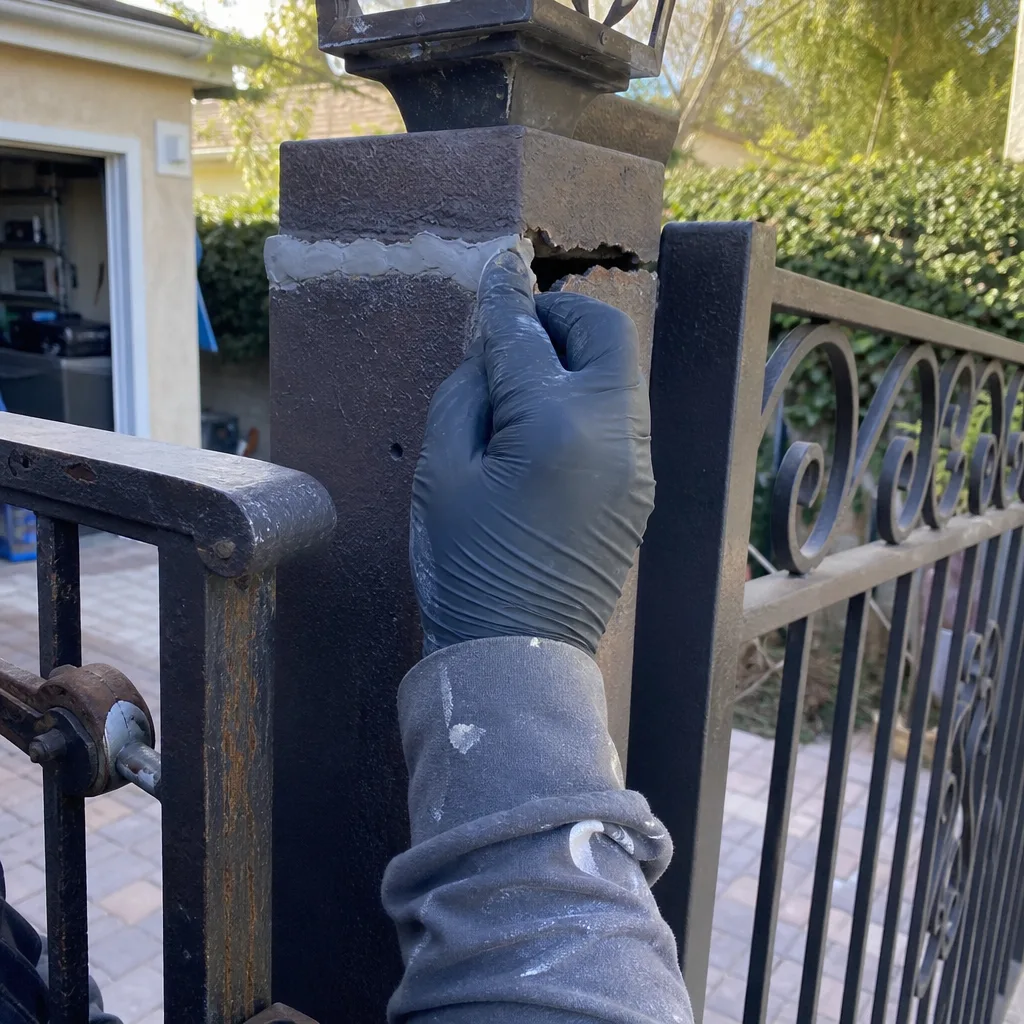
A generic quarterly maintenance model, where someone comes out every three months and lubes things, misses how Tarzana’s stress actually works. The year has three distinct windows, and each window needs a specific inspection before it starts. Here is the working calendar we use when a customer asks what they should do and when.
Early June: Pre-Summer Check
- Run three full cycles and note stop positions, latch engagement, and any hard reversing.
- Check the operator enclosure surface temperature at 3 p.m. on a sunny day.
- Inspect all visible conduit for cracks and brittleness.
- Listen for the gate fighting its own weight; if it groans near the closed position, the limit has drifted.
Mid-October: Pre-Santa Ana Check
- Torque-check every hinge bolt, arm-bracket bolt, and roller-saddle fastener.
- Disengage the operator and hand-cycle the gate to check for binding, sag, or drag.
- Wipe and regrease hinges, rollers, and bearing points.
- After any wind event over 40 mph, rerun the hand-cycle test and mark any fastener that moved.
Early December: Pre-Rain Check
- Clear soil and mulch away from ground-mounted operator pads.
- Seal conduit entry points and check for cracked bushings.
- Treat any bare metal with cold-galvanizing spray.
- Open the control enclosure (power off) and look for evidence of past water intrusion.
Three checks per year. Each one takes under an hour, and each one catches the damage that would otherwise surface as an emergency in the next season. Tarzana homeowners who run this calendar rarely have a gate fail without warning. The failures they do have show up as a note in their own log: the bolt that moved in October, the board that looked dark in June, the conduit crack they meant to seal in December.
How to Log Seasonal Inspections So a Future Technician Doesn’t Start Blind
The single highest-leverage habit a homeowner can adopt is not more maintenance. It’s better documentation. When a gate technician is called for a failure, they typically arrive knowing nothing: no history, no prior adjustments, no record of what the gate looked like when it was working correctly. That means every new technician starts each visit by rediscovering the problem. And that means the homeowner pays for rediscovery.
A seasonal log changes that. It doesn’t need to be elaborate. A phone camera and a note file are enough. What matters is that the record captures change over time, because gate failures are usually the result of accumulated small changes: a bolt loosening, a stop position drifting, a terminal corroding. The technician who can see the sequence is a technician who can repair the cause, not just the symptom.
What to record at each seasonal check:
- A photo of the stop position. Stand in the same spot each time and photograph the gate in its closed position relative to the latch. Three photos taken in June, October, and December reveal drift no single visit could.
- A photo of the control board through the enclosure window or with the cover off (power off). Terminals darkening over time show a heat problem; green deposits show water.
- A written note of anything that changed. “Hinge bolt turned half-turn by hand” or “Gate groans near closed position” or “Conduit cracked at the north bend.” One sentence. That’s all.
- The brand and model of the operator. Most Tarzana gates run one of the major automation brands, and having the model on hand saves a service visit. Ghost Controls, DoorKing, Elite, and Mighty Mule all use different programming menus and different remote frequencies. Knowing the model is the difference between a same-day fix and a parts-order delay.
If you have had service done before, keep the work order. Vance Gate Repair Tarzana leaves a written record of every adjustment and every part number on every visit, precisely so the next visit doesn’t begin with guesswork. But even if your prior technician left nothing, your own seasonal log is enough to bring a new technician up to speed in five minutes instead of an hour of diagnostic time.
Common Mistakes to Avoid
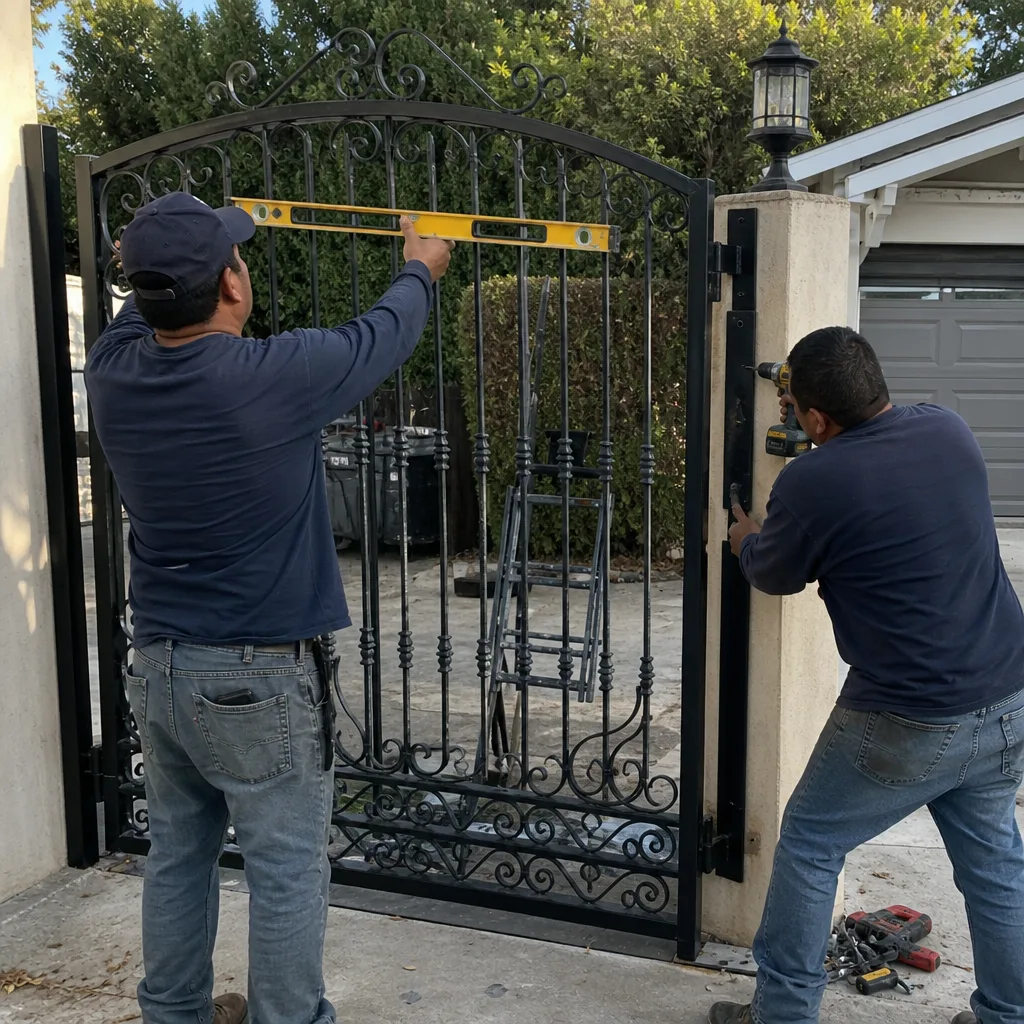
- Waiting until the gate fails to call. By the time a gate stops moving, whatever was wearing has usually been wearing for months. The summer limit drift, the October bolt loosening, and the December conduit crack all show symptoms long before they become failures. The person who researches gate repair in Tarzana in February usually could have made a smaller, cheaper call in November.
- Treating all four seasons as equal. Tarzana’s climate doesn’t degrade gate components evenly across a calendar year. A generic spring-and-fall maintenance plan misses the heat-cycling that starts in June and the wind-fatigue that peaks in October. The calendar should match the actual stress, not the brochure.
- Using penetrating oil on gate hinges. Penetrating oil is for freeing rusted fasteners, not lubricating moving parts. It thins out and washes off quickly, leaving the hinge dry again. Gate hinges and rollers want a heavier lithium or moly grease that stays put through Santa Ana dust and winter rain.
- Ignoring a gate that still works but groans or reverses. A gate that occasionally reverses mid-cycle or makes a grinding sound near the end of travel is signaling that the limit switch and the gate’s actual stop position have separated. That condition overloads the motor, which shortens its life and raises the risk of a hard failure. It doesn’t fix itself.
- Power-washing the gate and operator. A pressure washer drives water past the operator seals, into the control enclosure, and under the conduit grommets. It turns a cosmetic wash into a latent electrical problem. If the gate needs cleaning, use a low-pressure hose and a soft brush, and keep water away from the operator base and any enclosure seams.
- Filing the latch when the gate won’t latch. In Tarzana, gate-to-latch misalignment is usually either summer expansion drift or a post that moved in winter wet soil. Filing the latch permanently removes material to solve a temporary problem, and when the season changes and the gate returns to its original alignment, the latch is now loose. Fix the alignment, not the latch.
- Photographing nothing and trying to remember. Memory is not a maintenance log. A homeowner trying to remember whether the gate closed flush in June versus August cannot answer a technician’s question about drift. A photo on the phone answers it instantly and costs nothing.
When to Call a Professional
Some seasonal checks are safely in the homeowner’s lane: visual inspection, note-taking, bolt torque where the hardware is accessible, hand-cycling the gate with the operator disengaged. Other work is not. If the control board shows signs of heat damage, or the operator trips its breaker, or the gate reverses and you can’t identify a physical obstruction, the problem has moved into the electrical layer where amperage sensors, limit logic, and motor capacitors live. That layer is where a wrong guess costs more than a service call. The same goes for any hinge, weld, or frame issue discovered during a wind-fatigue check: a cracked weld point on a 300-pound gate leaf isn’t a homeowner repair, and a gate under spring or cantilever load can release that energy unpredictably if the wrong part is loosened first. If you see damage you can’t name, or a symptom that comes and goes, stop and call. Vance Gate Repair Tarzana offers free estimates in Tarzana, call (424) 258-8818, and every visit includes a written price before work starts and a photo record when the technician leaves.
Frequently Asked Questions
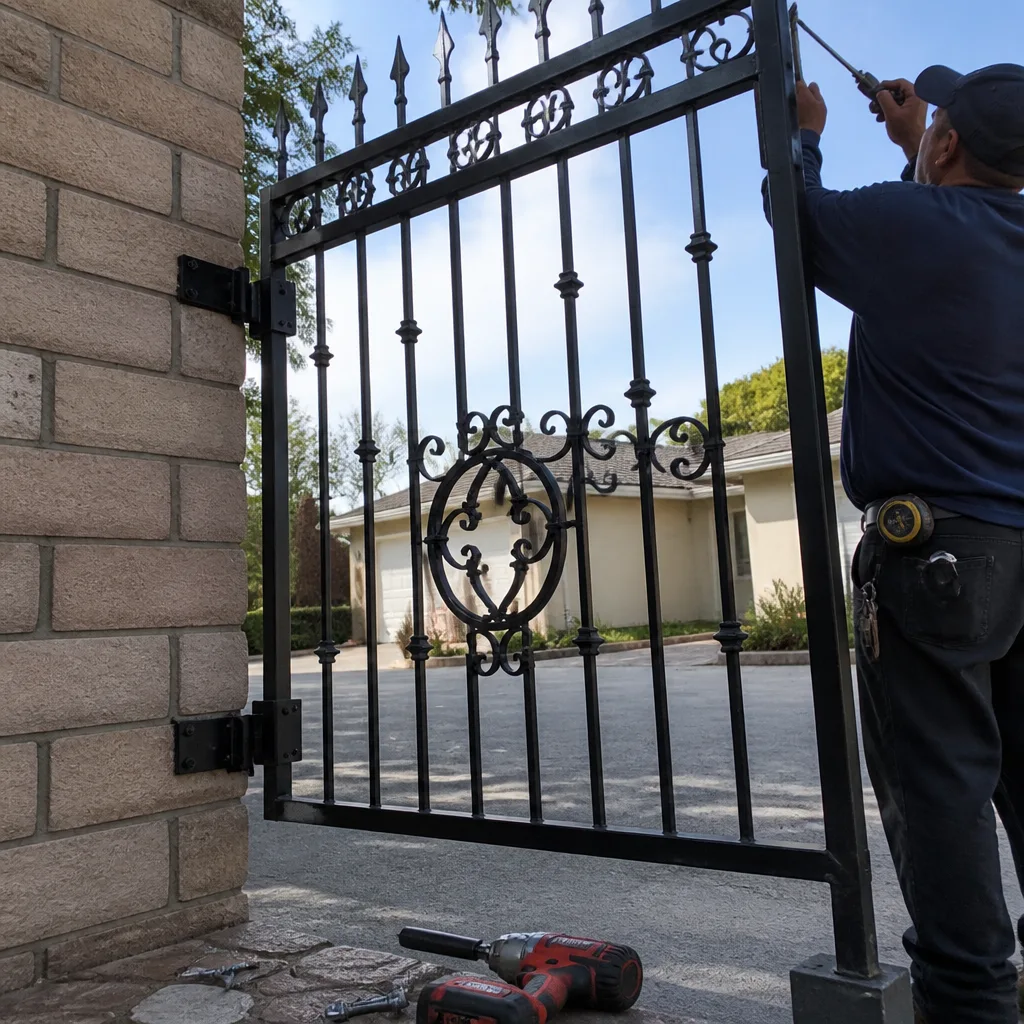
A gate in Tarzana should be inspected three times per year, timed to the three stress periods rather than a quarterly calendar: early June before summer heat, mid-October before Santa Ana winds, and early December before the winter rains. Each check takes under an hour and should include a visual inspection, a hand-cycle test, and a photo log of anything that changed.
A seasonal inspection and adjustment visit in Tarzana typically runs between $120 and $250, depending on the gate type, the operator brand, and whether any parts need replacement. Repairs found during the inspection are priced separately and in writing before any work begins. Call (424) 258-8818 for an exact quote, estimates are free.
Summer heat in Tarzana expands the gate leaf and arm bracket enough to move the gate’s stop position past the limit switch setting, which makes the operator’s amperage sensor read the binding as an obstruction and reverse the gate. The fix is a limit-switch recalibration and, in some cases, a hinge adjustment, not a sensor replacement.
Yes, a closed gate still takes cyclical wind loading through its hinges and frame, and the repeated gust-and-release cycle loosens fasteners and accelerates fatigue at weld points and bolt holes. After any wind event over 40 mph in Tarzana, disengage the operator and hand-cycle the gate to check for binding or sag.
No, you need a technician who works on the brand you have, not a technician who only installs one brand. Most Tarzana gates run one of the major automation lines, and the programming menus, remote frequencies, and limit-setting methods differ between them. A service call should start with the model number of your operator, not with a brand pitch.
A change in sound after rain usually means water has reached the operator’s moving parts or the hinges have washed clean of grease. If the gate stutters, runs briefly and stops, or trips its breaker, water has likely reached the electrical layer inside the ground-mounted operator or the control enclosure. Turn the gate off at the breaker and call a technician before powering it on again.
The Bottom Line
Tarzana gates don’t fail randomly. They fail on a schedule set by the San Fernando Valley’s three stress periods: heat that drifts the limits, wind that fatigues the hardware, and rain that finds the low opening. A homeowner who runs three short inspections per year, timed to June, October, and December, and logs what they find with a phone camera, stays ahead of every common failure mode. The gate that fails by surprise is the gate that was never checked against its own history. For anything beyond a visual check or accessible hardware, gate motor and opener service in Tarzana starts with a written price and ends with a photo record. Call Vance Gate Repair Tarzana at (424) 258-8818 for a free estimate, or use this guide as your standing maintenance calendar. Either way, the gate’s history should be written down, not remembered.
For a deeper look at what full replacement involves, see our guide to gate installation in Tarzana, and for the service this guide feeds into, start at the Vance Gate Repair Tarzana home page.
Written by Adrian Vance, Owner at Vance Gate Repair Tarzana, serving Tarzana since 2014.