
Last updated September 20, 2026
Free on-site gate assessment - hinges, posts, and your LiftMaster or Nice gate operator checked before anything is quoted
The assessment is free and the quote is the invoice.
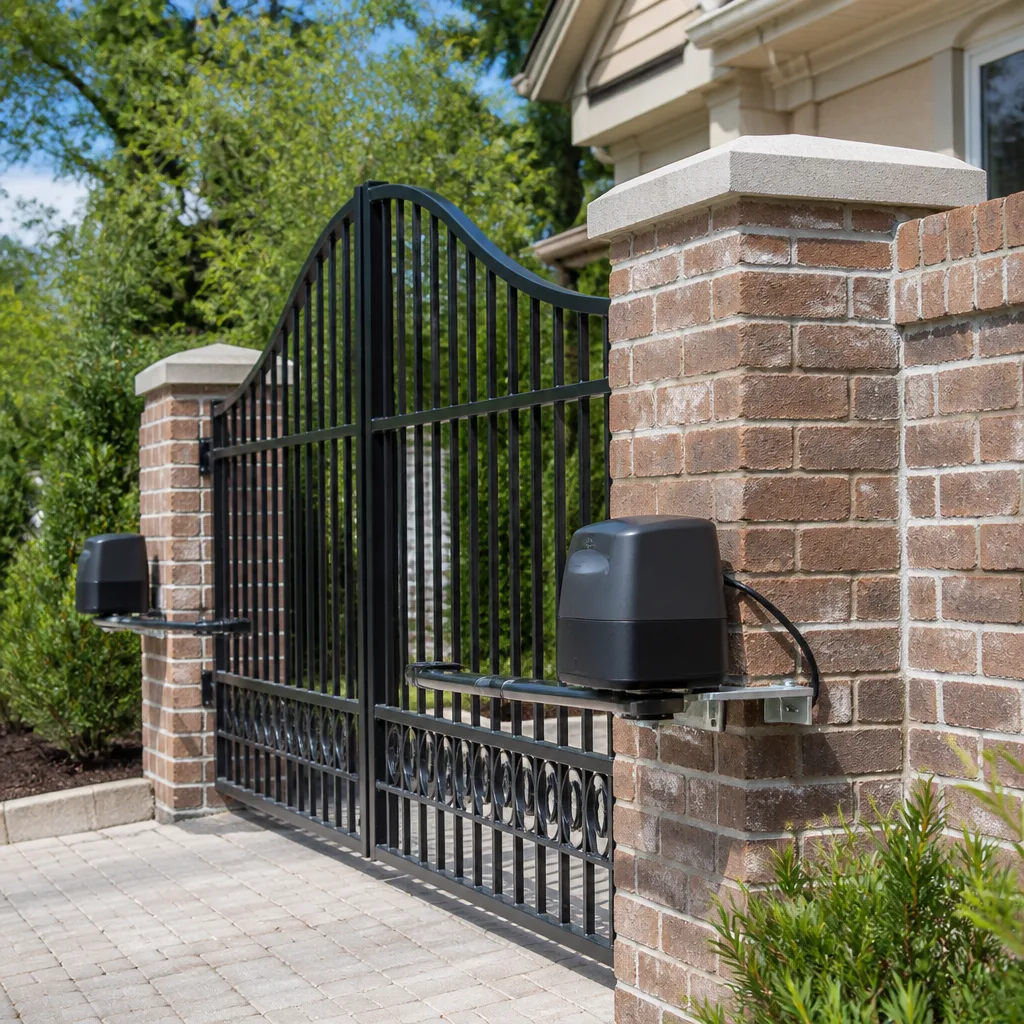
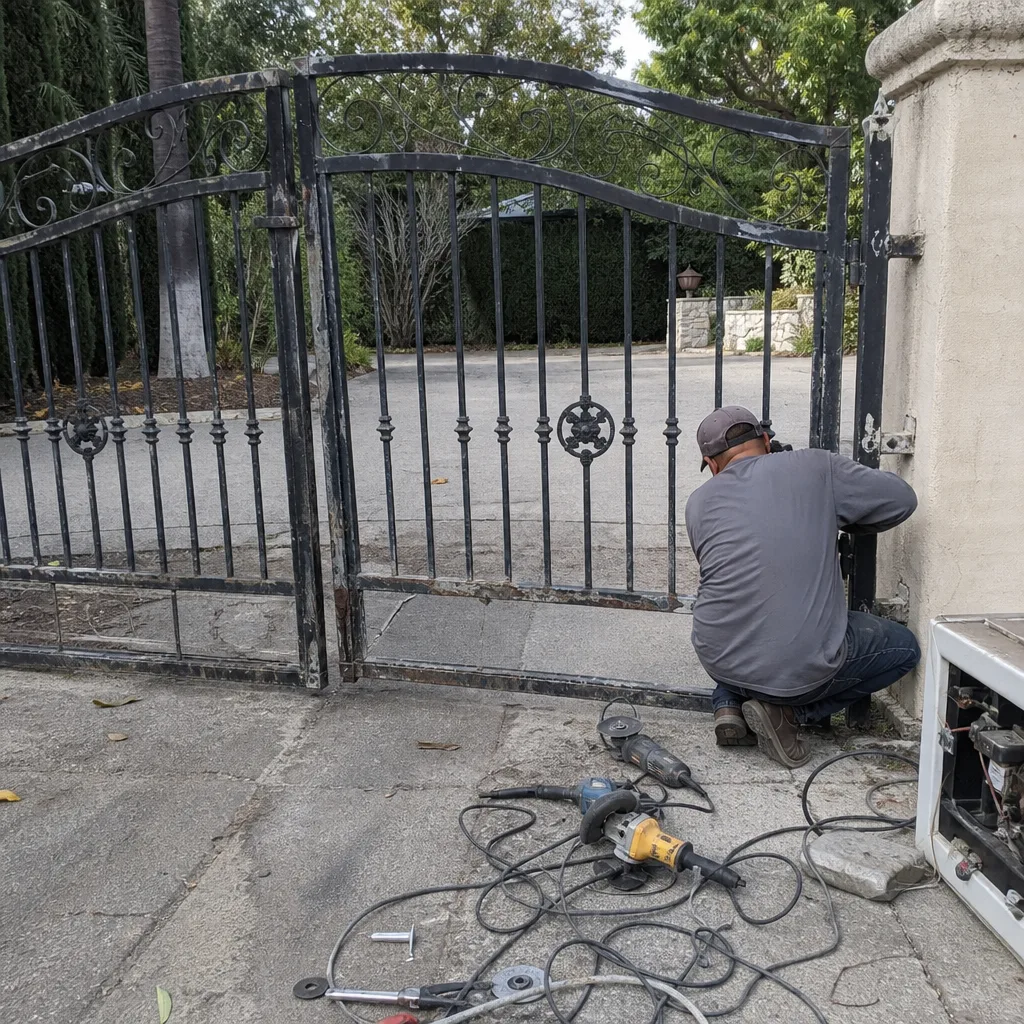 Before
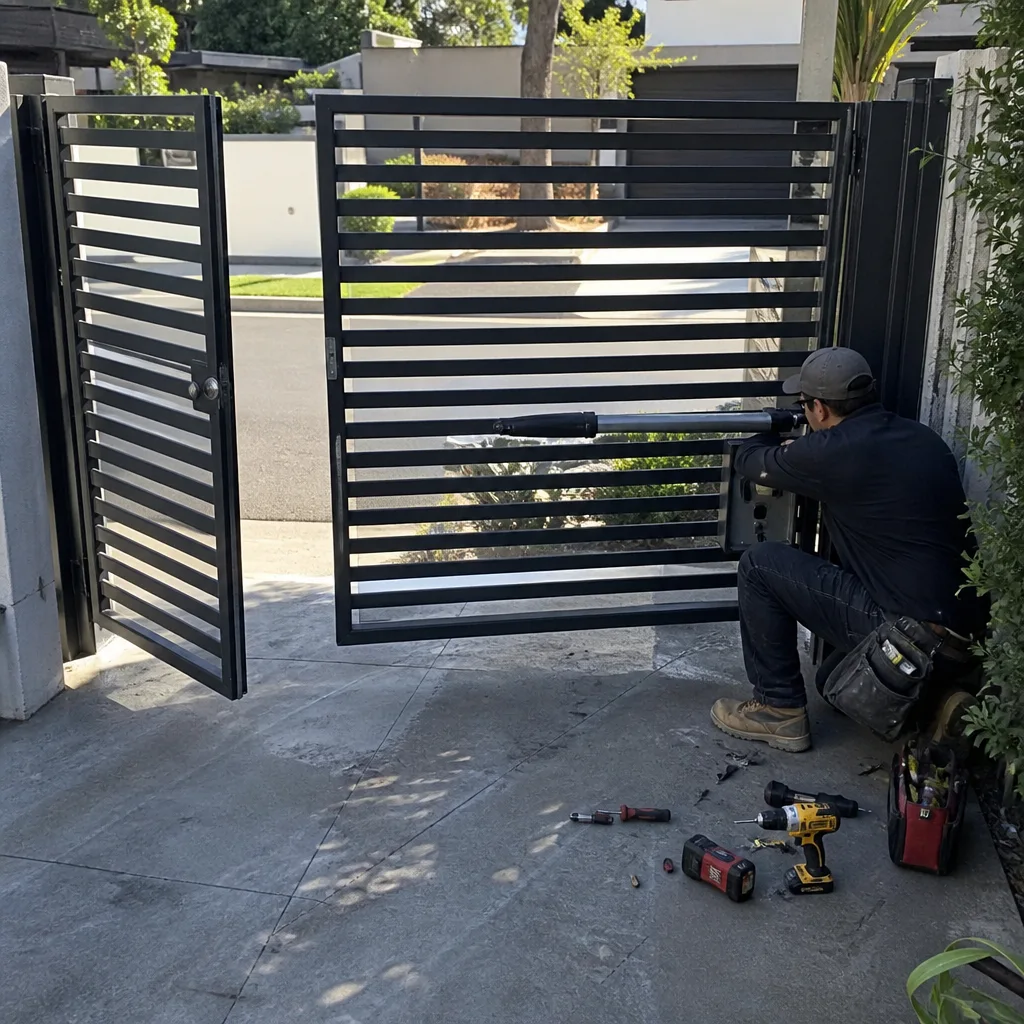 After
After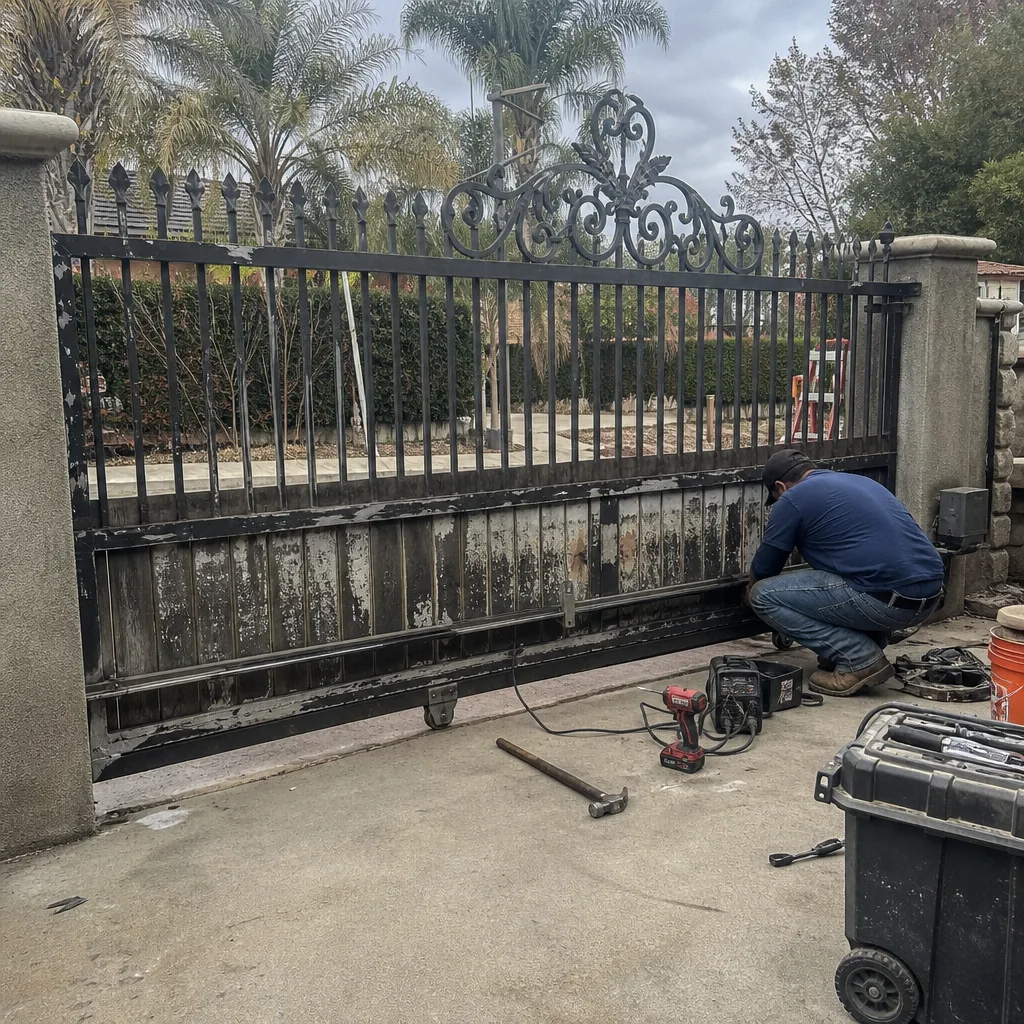 Before
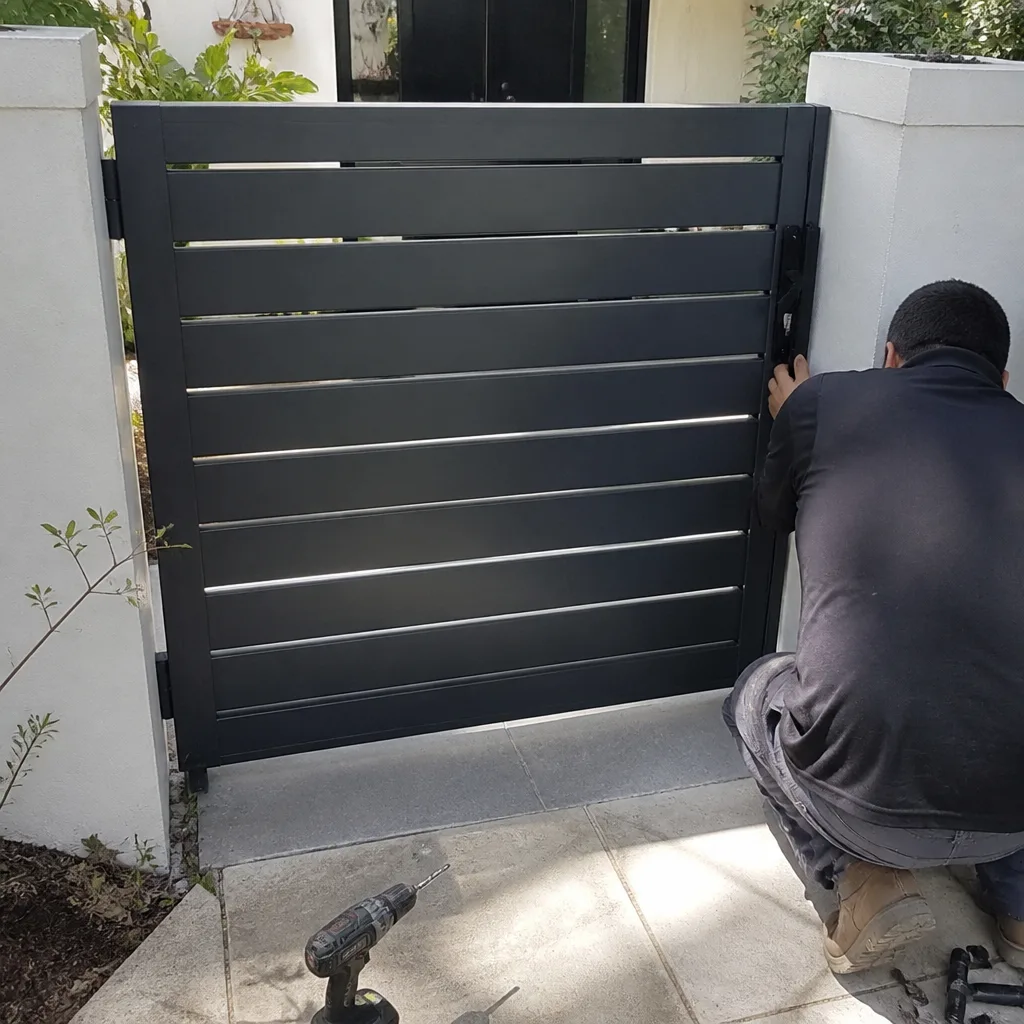 After
After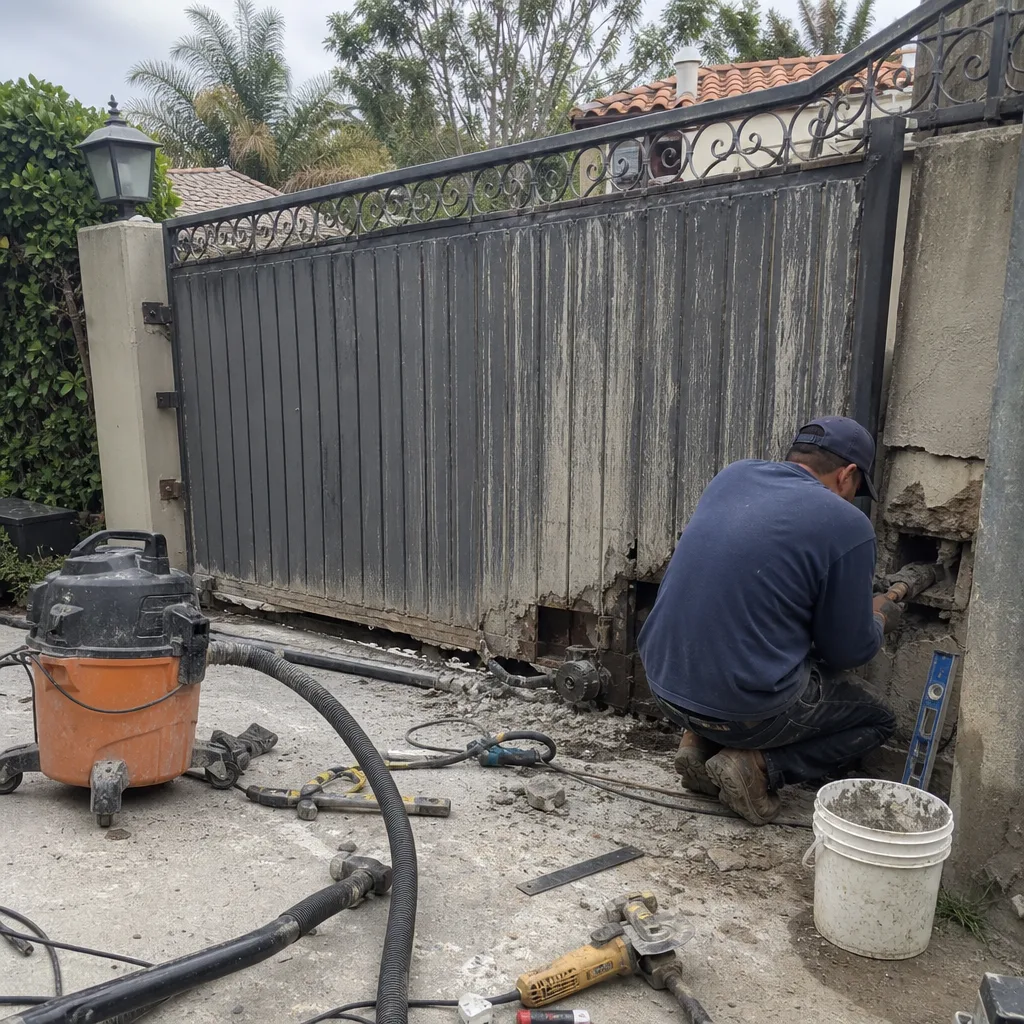 Before
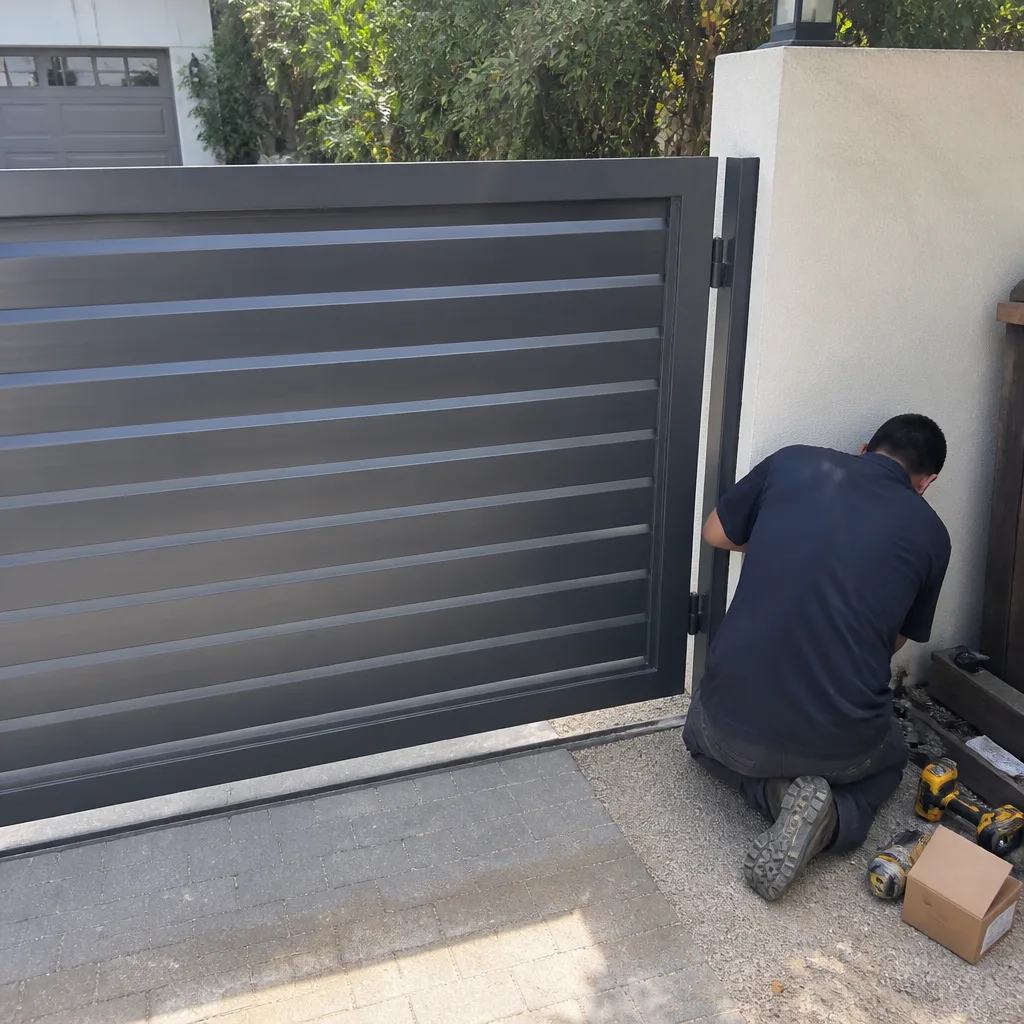 After
AfterHow to Hire a Gate Repair Contractor in Tarzana: A Step-by-Step Guide
Most gate repair searches in Tarzana begin the same way: a motor hums without moving, a hinge drags, a sensor clicks and won’t stop. The homeowner calls three companies, gets three verbal numbers, and picks the cheapest. Then the technician opens the panel, finds a corroded relay the first estimate couldn’t have seen, and the $350 quote becomes $900 before lunch. The problem isn’t the contractor. It’s that a verbal number and a written scope are not the same product. This guide teaches you how to demand the second one, because in gate work, the document you’re handed before the job starts is the only thing that protects you when the invoice arrives. For The Complete Guide to Gate Repair in Tarzana, see our full breakdown. If you’re in Tarzana, where iron and steel sit in marine-layer moisture nine months of the year, that paperwork matters more than in a dry inland zip code.
Quick Answer
To hire a gate repair contractor in Tarzana, require a written scope before you agree to anything: part numbers, labor description, exclusions, warranty terms, and a documented photo record left behind. Verify the contractor’s California CSLB license under the D-28 (gate equipment) classification, check for experience with your specific motor brand (LiftMaster, FAAC, BFT, Linear, Viking, Ghost Controls, DoorKing, Elite, Mighty Mule), and reject any estimate that arrives only by phone. The price matters less than whether the contractor will write it down before opening the panel. That written document is your only enforceable record when a repair goes sideways.
Table of Contents
- Why the Written Scope Is the Real Hiring Criterion
- Step 1: Verify the License Before You Let Anyone Touch the Gate
- Step 2: Demand These Five Elements in Every Written Gate Repair Scope
- Step 3: Test a Contractor’s Documentation Habit Before They Arrive
- Step 4: Ask About Parts Sourcing: OEM vs. Aftermarket
- Red Flags in a Verbal Estimate That Signal Mid-Job Repricing
- A Safety Note on Gate Springs and Motors
- Common Mistakes to Avoid
- When to Call a Professional
- Frequently Asked Questions
- The Bottom Line
BeforeAfterWhy the Written Scope Is the Real Hiring Criterion
Every “how to hire a contractor” article tells you to check reviews and get three quotes. That advice assumes all quotes measure the same thing. They don’t. In gate repair, the single most important variable is information asymmetry: the technician knows what’s inside the control panel, and you don’t. A verbal estimate exploits that gap. A written scope closes it.
Here’s what happens without one. A contractor quotes $350 over the phone for a “gate not opening.” The tech arrives, opens the panel, and finds a blown capacitor, a misaligned limit switch, and a photo-eye that’s been dead for a year. Now the job is $780. You can’t prove the original number meant anything, because nothing was written. You pay it, because your gate is open and your car is blocked in.
Now consider the same job with a written scope. The contractor arrives, opens the panel, and writes down: Limit switch found 12 degrees past travel; photo-eye beam misaligned by roughly two inches; capacitor reading 8 microfarads on a 20-microfarad rating. Repair scope: replace capacitor with exact brand-model part, reset limit switch to correct travel, align photo-eye. Parts: [part number]. Labor: [description]. Exclusions: none observed. Documentation: photo log of before and after. Now you know what you’re paying for. And if the invoice doesn’t match the scope, you have a document.
At Vance Gate Repair services, this is Clause 1 of the Haven Standard: have it in writing. Every job in Tarzana starts with a written price and a written scope before any work begins. Not because it’s impressive. Because it’s the only way a homeowner can hold a contractor to the number they agreed to. If you take one thing from this guide: hire the contractor who writes things down.
Step 1: Verify the License Before You Let Anyone Touch the Gate
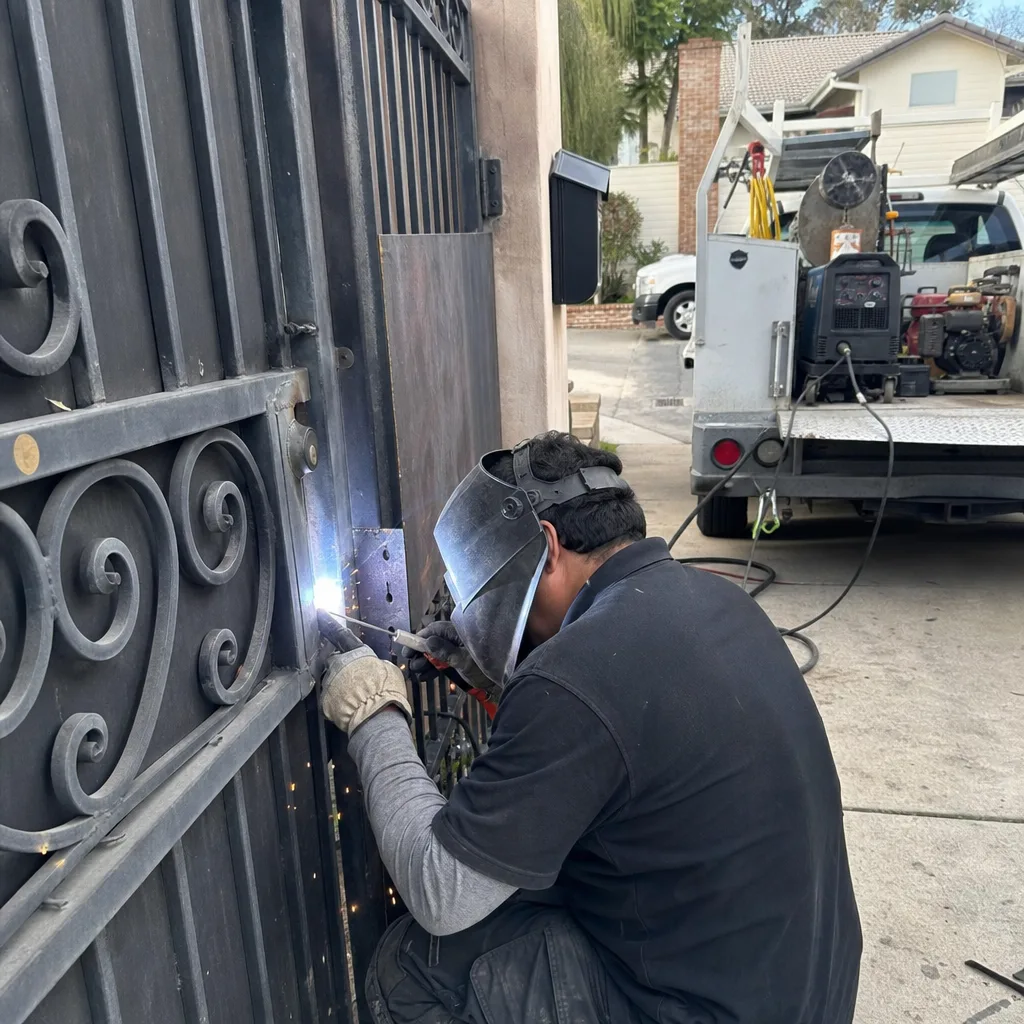
California requires a C-61/D-28 license specifically for gate equipment: motors, openers, safety edges, photo-eyes, and the wiring that connects them. A general contractor’s license doesn’t cover this trade. Neither does a handyman with a website. Before you book, pull the license.
Here’s the two-minute process:
- Go to the California Contractors State License Board (CSLB) website.
- Click “Check a License” and enter the contractor’s name or license number.
- Confirm the license is “Active” and not suspended or revoked.
- Check the classification field. You want to see “C-61/D-28” or “D-28.”
- Note the issue date and any workers’ compensation coverage listed.
In Tarzana, this matters more than elsewhere because the gate market here is fragmented. You’ll find retired mechanics, weekend welders, and unlicensed operators advertising on neighborhood boards and Facebook groups. Some do good work. Some don’t carry insurance, and when a 600-pound sliding gate drops off its rail because someone didn’t check the truck bolts, the homeowner’s policy is the one that pays.
A licensed D-28 contractor carries insurance, has a bond on file with the state, and has a number you can look up when something goes wrong. Vance Gate Repair has been licensed and operating in Tarzana since 2014, and every technician is background-checked and uniformed. The license number is on the page, not hidden behind a phone call.
Learn more about how gate repair works in Tarzana, including what to expect from a licensed technician.
Step 2: Demand These Five Elements in Every Written Gate Repair Scope
A written scope is only as good as its details. A one-line estimate that says “fix gate: $450” is not a scope. It’s a number. When you get the document, check for these five elements before you sign anything.
1. Part numbers. Every replacement part should be identified by manufacturer and part number. “New control board” means nothing. “LiftMaster 41A5021-3G logic board” means something. If the contractor won’t name the part, they haven’t diagnosed the problem. In our experience in Tarzana, vague part descriptions on estimates are the single most common precursor to a mid-job price increase.
2. Labor scope. The document should describe exactly what the technician will do, in physical terms: remove, replace, reset, align, adjust, weld, lubricate, test. Not “repair.” You want to see the specific actions, so you can verify they were performed when the technician walks you through the finished job.
3. Exclusions. Every scope should state what is not included. Does the price cover disposal of the old part? Does it include reprogramming the remote? Does it include a follow-up visit if the same symptom returns? If exclusions aren’t listed, the contractor can define them after the fact.
4. Warranty terms. What’s covered, for how long, and under what conditions. A 90-day parts warranty is different from a one-year labor-and-parts warranty. At Vance Gate Repair, the 365-Day Done Right Promise covers every completed job: if the repair isn’t right, we make it right, no argument, no fee, for a full year.
5. Documentation you’ll receive. This is the one most homeowners never think to ask for, and it’s the one that separates serious operators from everyone else. Ask: what will I have in my hand when you leave? The answer should include a written record of what was found, what was installed, and photos of the work. If the contractor says “I’ll take notes on my phone,” move on. Under Haven Standard Clause 4, every Vance visit includes a documented photo record: what was found, what was adjusted, what was replaced. You keep it. We file a copy. No future technician has to guess what the last one did.
Step 3: Test a Contractor’s Documentation Habit Before They Arrive
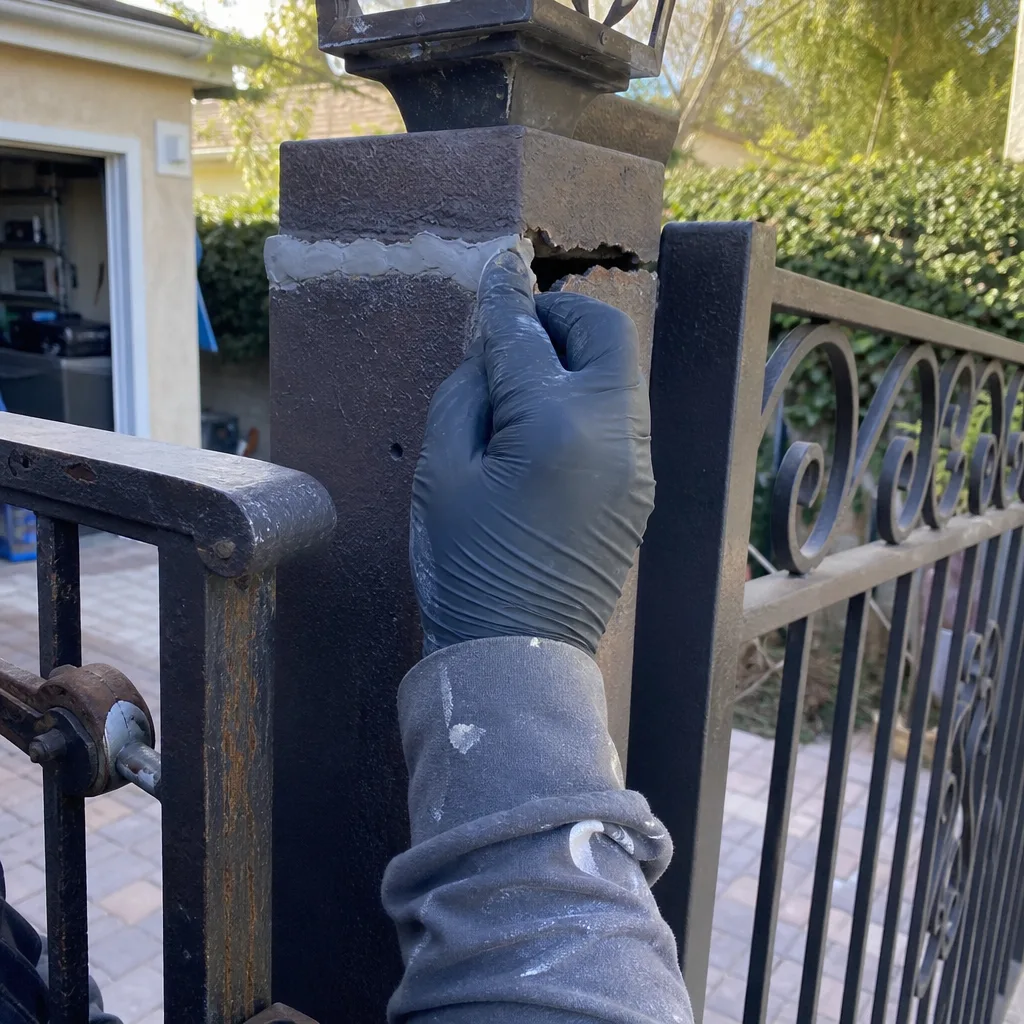
Documentation isn’t something you can check after the work is done. You need to test for it before you book. Here’s how to read the contractor’s answer:
Ask this question, word for word: “When the job is finished, what written record do I get of what you found and what you changed?”
Now listen to the answer.
- Answer A: “We leave a photo log of every adjustment, the part number installed, and a written summary of the before and after.” This contractor documents as a habit. Hire them.
- Answer B: “I’ll explain everything when I’m done.” That contractor leaves nothing behind. If the gate fails again in three weeks, you’ll be explaining the problem to a new tech from scratch, paying a new diagnostic fee, and hoping the new person finds what the first one missed.
- Answer C: “We don’t really do paperwork, but I can text you what I did.” Text messages are better than nothing, but they are not a service record. They live on a phone that will be replaced in two years.
Adrian Vance built his documentation habit on commercial access-control sites starting in 2014, where a gate that fails at a loading dock costs thousands of dollars an hour and the building manager demands a written record of every visit. That habit carried over into residential work in Tarzana. We photograph the limit switch before we adjust it. We photograph the wiring before we change it. We leave the photos with you. When a homeowner calls six months later with a new symptom, we can pull the previous job record and see exactly what was done, which parts were used, and whether the new problem is related to the old one. That’s the difference between a contractor and a record-keeper. In gate work, you want the record-keeper.
Step 4: Ask About Parts Sourcing: OEM vs. Aftermarket
Gate operator parts come in two tiers: OEM (original equipment manufacturer) and aftermarket. The distinction matters more than most homeowners realize, and it’s a good test of the contractor’s transparency.
OEM parts are made by the same company that built your gate operator: a BFT part for a BFT motor, a Linear part for a Linear opener. They’re manufactured to the exact tolerance of the original unit, carry a manufacturer’s warranty, and are priced accordingly.
Aftermarket parts are made by third-party suppliers to be “compatible” with your motor. Some are fine. Many are not. A cheap aftermarket capacitor in a Viking operator can fail within a year, while a genuine Viking part might last five. The problem is that when an aftermarket part fails, it can damage other components, and the resulting repair is always more expensive than the money saved on the part.
Ask the contractor directly: “Are you quoting OEM or aftermarket parts?” The answer should be immediate and specific. “OEM, part number so-and-so, and here’s what it costs.” If the contractor hesitates, says “they’re all the same,” or can’t name the manufacturer of the part they plan to install, that’s a red flag. A Ghost Controls operator runs on specific control board firmware. A generic logic board won’t work the same way, no matter what the seller on eBay claimed.
At Vance Gate Repair, we service nine major gate-automation brands: LiftMaster, FAAC, BFT, Linear, Viking, Ghost Controls, DoorKing, Elite, and Mighty Mule. That means we install the part that matches your motor, not whatever’s on the truck. For a gate motor or opener repair in Tarzana, the part source is written into the scope before the work starts.
Red Flags in a Verbal Estimate That Signal Mid-Job Repricing
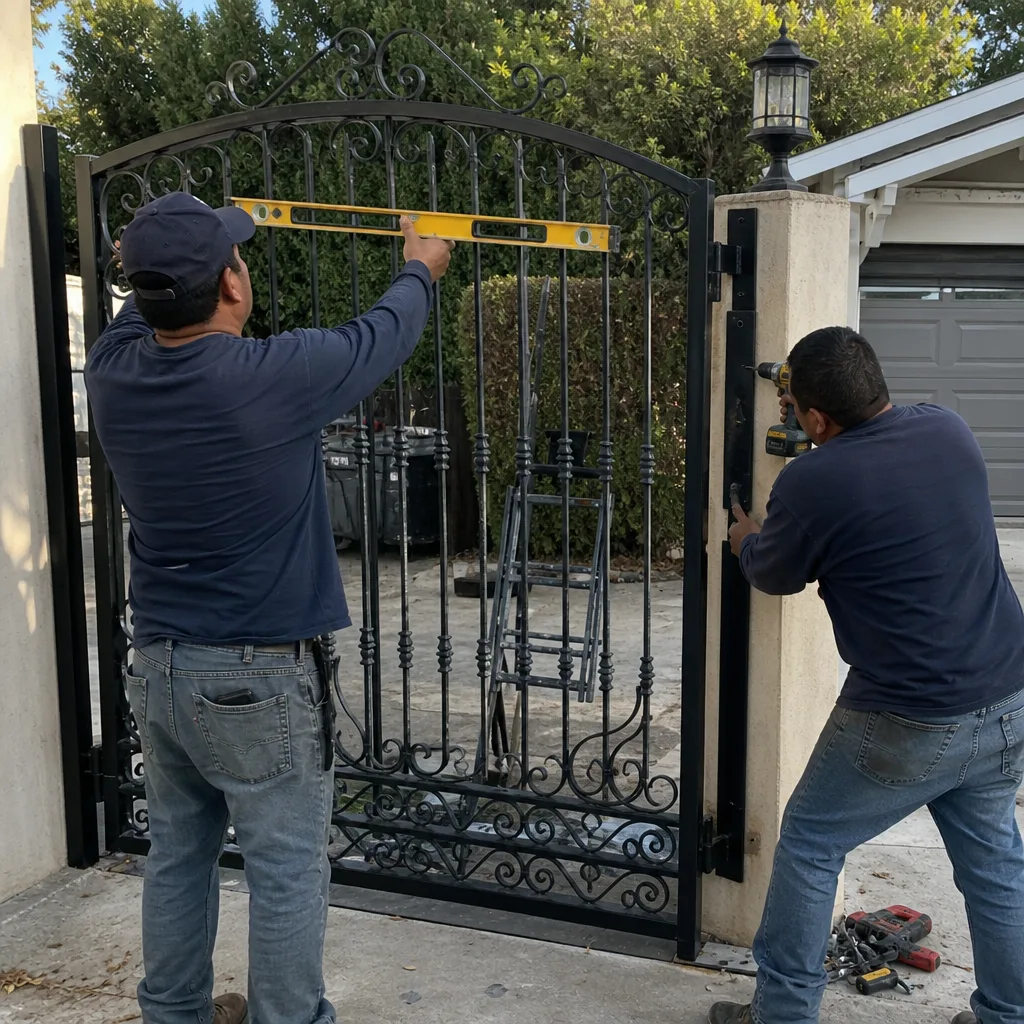
Some contractors give verbal estimates because they’re busy. Others give verbal estimates because a verbal estimate is a license to reprice once the panel is open and the customer is committed. Here’s how to separate the two.
Red Flag 1: The number arrives without a diagnosis. If the contractor quotes $400 before looking at the gate, they don’t know what’s wrong. A $400 number for an unspecified problem is not an estimate. It’s a placeholder. The real number arrives later.
Red Flag 2: “It depends on what we find.” Every honest gate technician will say some version of this, because some problems reveal themselves only after disassembly. But a good contractor follows it with specifics: “If it’s the control board, this is the part and this is the price. If it’s the capacitor, here’s the part and here’s the price.” A contractor who uses “it depends” to avoid giving any numbers at all is preserving the right to set the price later.
Red Flag 3: No mention of specific parts. “I’ll replace the motor” is not a scope. Which motor? What brand, what model, what horsepower rating? If the contractor can’t name the part before installing it, they’re either guessing or planning to use whatever’s convenient.
Red Flag 4: The contractor wants payment before describing the work. A deposit is standard on large installations where materials are ordered in advance. A full payment upfront on a repair that uses parts from the truck is just leverage.
Red Flag 5: You can’t get a second opinion on paper. If the contractor won’t write down what they plan to do because “that’s not how we work,” you should hear that as: “we don’t want you to have anything you can hold against us.” At Vance Gate Repair, we’ll review any written estimate from another company for free. Bring the paperwork, and we’ll tell you whether the scope is complete, whether the price is in line with Tarzana market rates, and whether anything was left out.
Vance Gate Repair Tarzana has built its reputation on written scopes, not verbal promises.
A Safety Note on Gate Springs and Motors
Automated driveway gates in Tarzana are heavy. A sliding steel gate can weigh 300 to 600 pounds, and it moves on wheels or tracks that require constant alignment. Swing gates are worse: the torsion springs that counterbalance a swing gate are under enormous tension, and the motor that drives it is connected to a hardened steel arm that can shear a finger clean off if the gate is operated manually without disengaging the operator.
This is not a section about how to repair your own gate. It’s a section about why you shouldn’t. High-tension springs and limit mechanisms store energy that can release instantaneously. A homeowner who opens the spring housing without knowing the tension setting can end up in an emergency room, and the gate doesn’t care how many YouTube tutorials you watched.
If your gate is making a grinding sound, if the motor runs but the gate doesn’t move, or if a spring is visibly deformed, stop using the gate and call a licensed D-28 technician. In the meantime, close the circuit breaker for the gate operator and lock the gate in place if possible. A trained professional knows how to release spring tension safely and how to verify that the safety edges and photo-eyes are working before returning the gate to service. In Tarzana, where gates sit in corrosive coastal air and components age faster than they do inland, Seasonal Gate Repair Care for Tarzana: Year-Round Homeowner’s Guide recommends regular safety inspections as the cheapest insurance you can buy.
Common Mistakes to Avoid
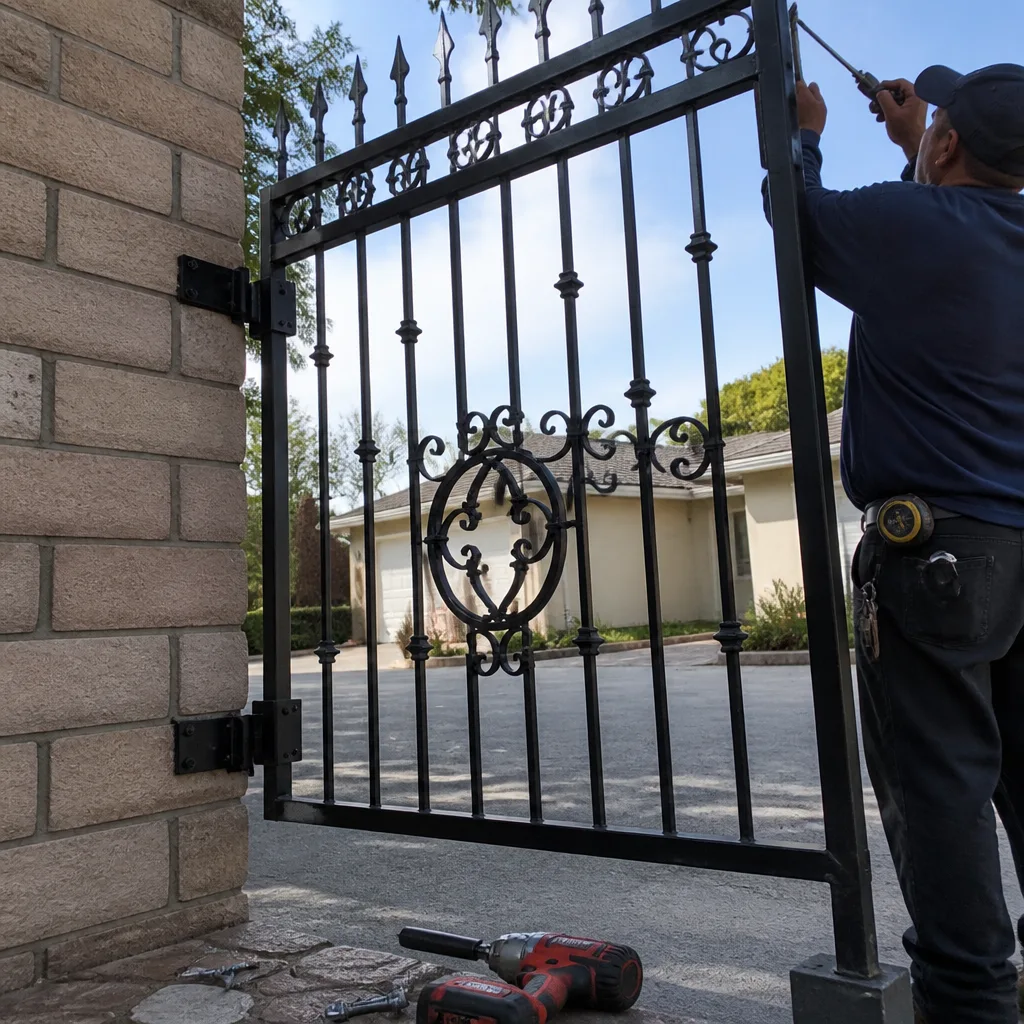
- Hiring on price alone. The cheapest verbal quote is often the most expensive final invoice. In Tarzana, gate repair prices vary by part quality and documentation practice. You’re not paying for the hour; you’re paying for what’s written down.
- Skipping the license check. An unlicensed operator can’t be held to CSLB standards, and your recourse is limited to small claims court. The two minutes it takes to check a license on the CSLB website is the highest-return time you’ll spend on this hire.
- Accepting a verbal estimate as binding. If it’s not written, it didn’t happen. California law protects consumers, but proving a verbal price after the fact is nearly impossible.
- Ignoring the photo-eye and safety edge. Homeowners in Tarzana often treat gate safety devices as optional accessories. They’re not. California law requires UL 325-compliant safety devices on every automated gate, and disabling them creates a liability on your property that your insurer may not cover.
- Not asking about the warranty in writing. “It’s under warranty” means nothing unless the terms are on the document you sign. Ask what’s covered, for how long, and whether labor and parts are both included.
- Choosing a contractor who doesn’t work on your motor brand. A Linear specialist may not know Ghost Controls firmware. A BFT tech may not stock Viking parts. Ask which brands the contractor services before you book, and pick someone whose experience matches the motor already on your property.
- Forgetting to ask what documentation you’ll receive. The written scope is the first document. The final record is the second. Without both, you have no evidence of what was actually done, and the next repair starts from zero.
When to Call a Professional
Call a licensed gate contractor in Tarzana when the gate stops moving under motor power, when it reverses on its own, when it grinds, squeals, or drags, when the remote works intermittently, or when you see visible rust at a weld or hinge point. These are not fix-it-weekend projects. They are mechanical and electrical systems that interact with vehicle traffic and human bodies. The longer a gate runs with a failing part, the more damage it does to the rest of the system: a bad capacitor burns out a control board, a misaligned photo-eye overloads the motor, a dragging hinge bends the arm. Early repair is always cheaper than deferred replacement. For more guides & resources, visit our blog. Vance Gate Repair Tarzana offers free estimates in Tarzana, and every estimate is written, including a specific scope and a flat price for the work. Call (424) 258-8818.
Frequently Asked Questions
Most gate repairs in Tarzana run between $180 and $450 for common items like limit switch adjustments, photo-eye realignment, and capacitor replacement. Motor replacements run $650 to $1,400 depending on brand and whether the arm bracket is intact, and full operator replacements start around $1,200 and go up by horsepower and automation features. The exact price should always be written down before work starts. Call (424) 258-8818 for a free written estimate.
Check the California CSLB website for a C-61/D-28 license classification, which specifically covers gate equipment. The license should be listed as Active, and the contractor should be able to produce the number before the visit. Ask for it on the phone, and don’t accept a general contractor license as a substitute.
A written gate repair estimate should include part numbers for every component being replaced, a description of the labor being performed, any exclusions, the warranty terms, and a list of the documentation you’ll receive after the work. If any of these are missing, ask for a revised document before you agree to the work.
Repair is usually the right choice if the motor is less than 10 years old, the housing is intact, and the problem is a replaceable component like a capacitor, relay, or limit switch. Replacement makes sense when the motor has overheated multiple times, the gearbox is grinding, or the board has failed and the motor is no longer supported by the manufacturer. A good contractor will show you the diagnostic evidence before recommending either path.
Most common repairs like photo-eye alignment, limit switch adjustments, and capacitor replacements take 45 to 90 minutes on site. Motor replacements usually take 2 to 4 hours. The limiting factor in Tarzana is often parts availability for older motors, which is why a contractor who stocks parts for multiple brands can complete the job in one visit instead of two.
Yes. A gate repair involves access to your electrical panel, your driveway, and possibly the interior of a keypad or intercom. You should be present to authorize the written scope before the work starts and to review the final documentation when the technician leaves. If you can’t be home, ask the contractor to send the written scope for approval by text or email before beginning any work.
In Tarzana, the most common gate problem we see is photo-eye misalignment, usually caused by a gate that has been bumped or pushed manually, combined with salt-air corrosion on the sensor housings. The second most common is a failing capacitor in the motor, which produces a hum with no movement. Both are quick fixes when caught early and expensive failures when ignored. For more on gate repair specifics in Tarzana, see our guide to gate repair in Tarzana.
The Bottom Line
Hiring a gate repair contractor in Tarzana comes down to one test: will the contractor write down what they’ll do, what it costs, and what they leave behind? If the answer is yes, and the license checks out, and the parts are named by number, you’ve found a contractor who can be held to their word. If the answer is a number on the phone and a handshake, keep looking. The gate at the end of your driveway is a machine with a safety system and a motor. It deserves the same documentation as the car parked behind it. At Vance Gate Repair, that documentation is standard: a written price before the work starts, a photo record when the work is done, and a full year to make it right if it isn’t. For gate installation or motor service in Tarzana, get a written quote for gate installation in Tarzana or call (424) 258-8818. A live person answers, 24 hours a day.
Written by Adrian Vance, Owner at Vance Gate Repair Tarzana, serving Tarzana since 2014.