
Last updated September 20, 2026
Free on-site gate assessment - hinges, posts, and your LiftMaster or Nice gate operator checked before anything is quoted
The assessment is free and the quote is the invoice.
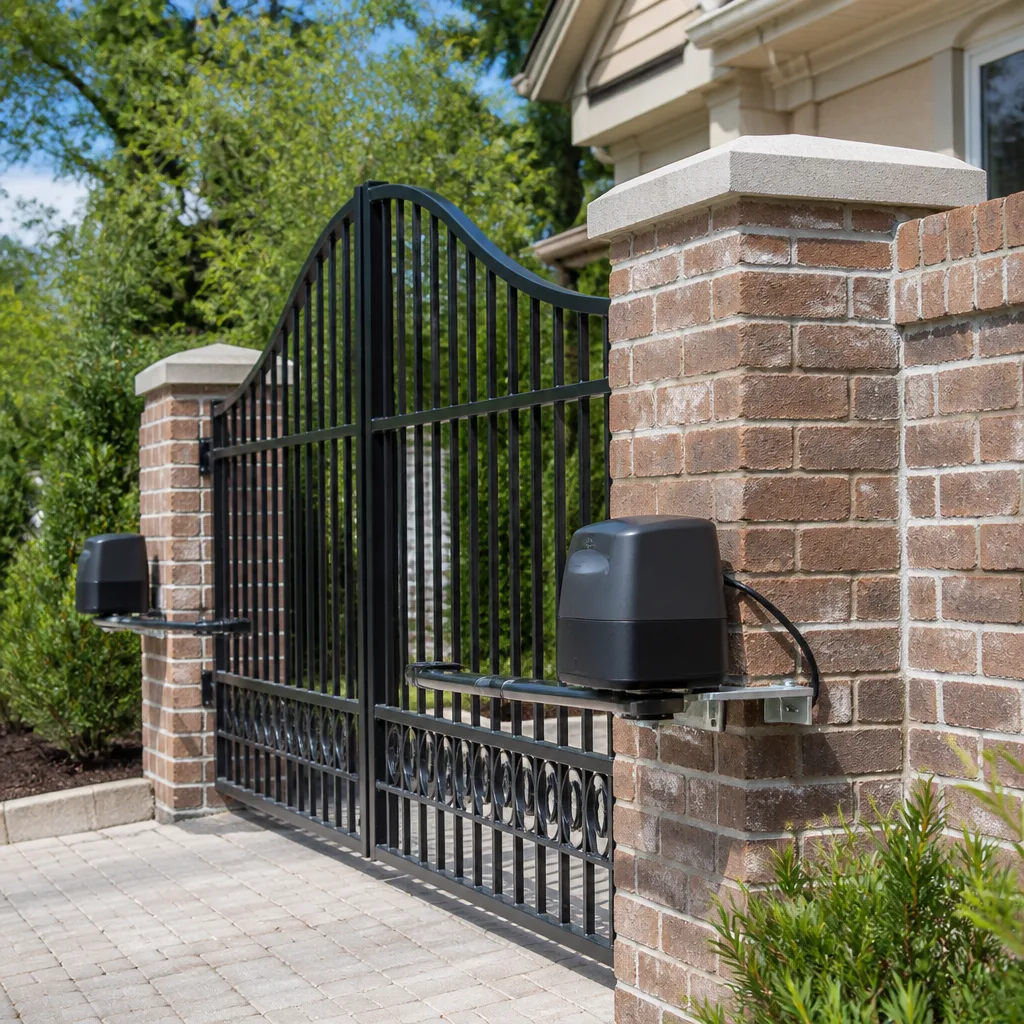
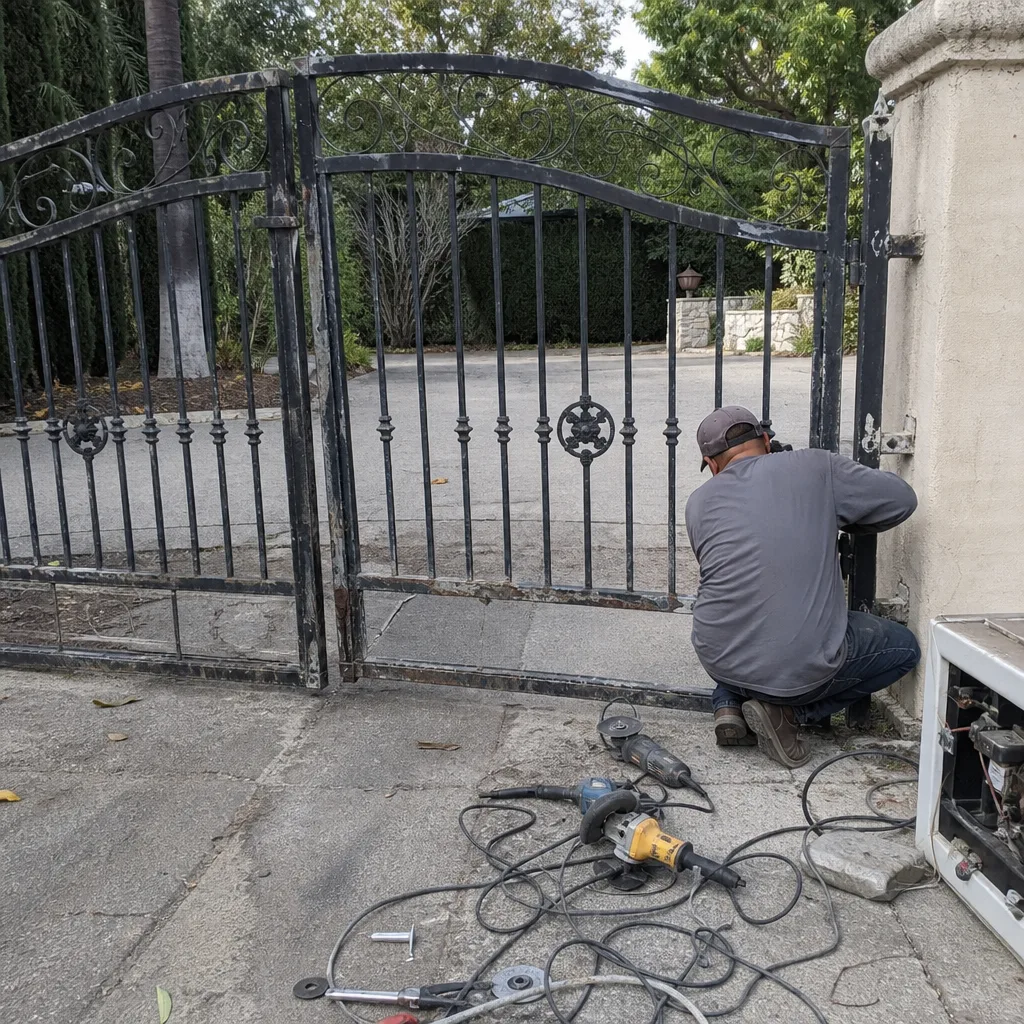 Before
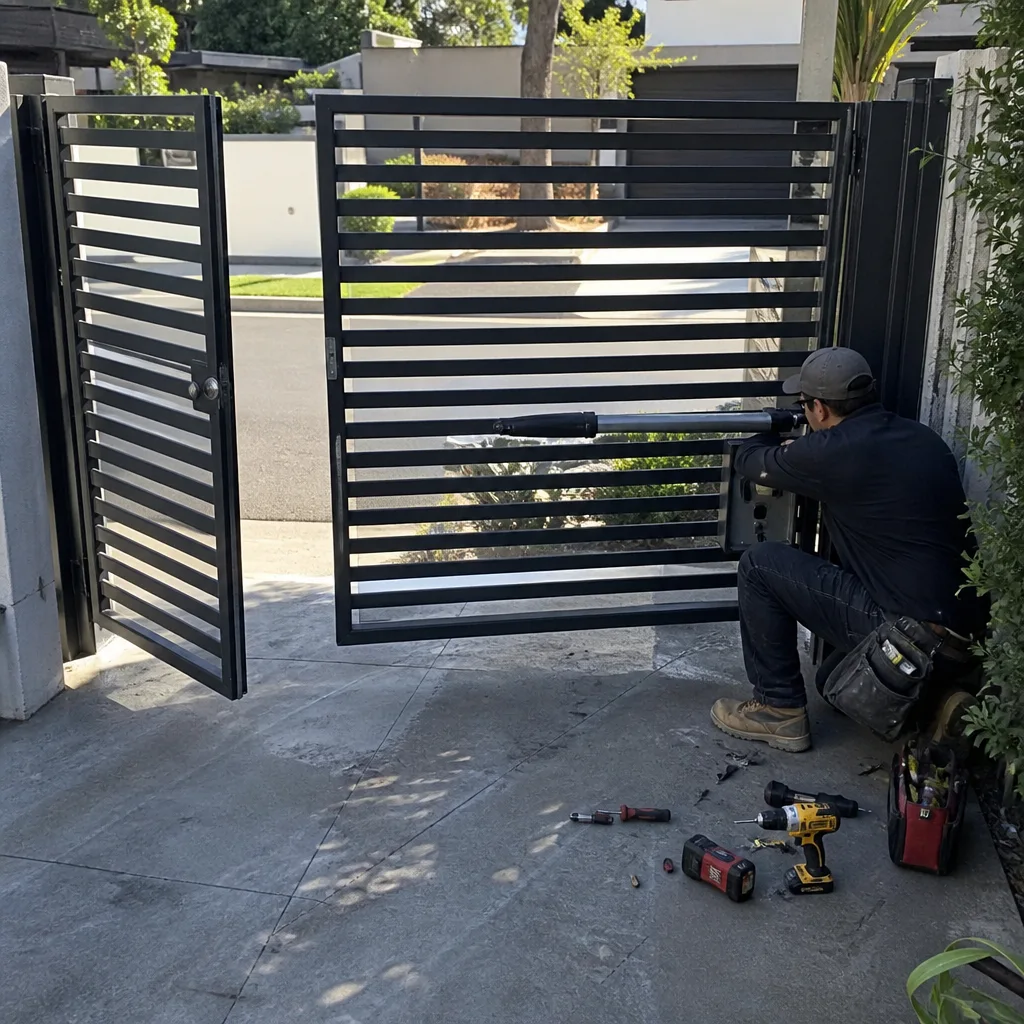 After
After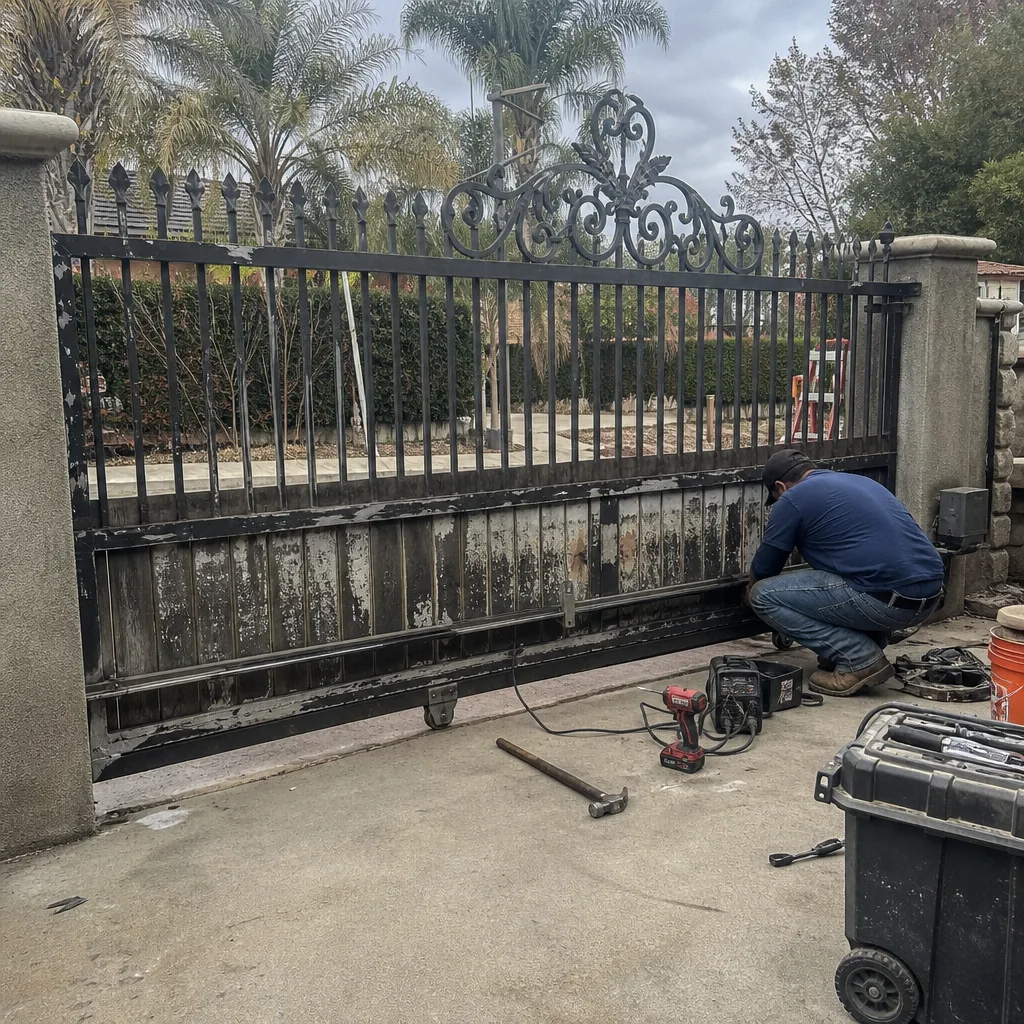 Before
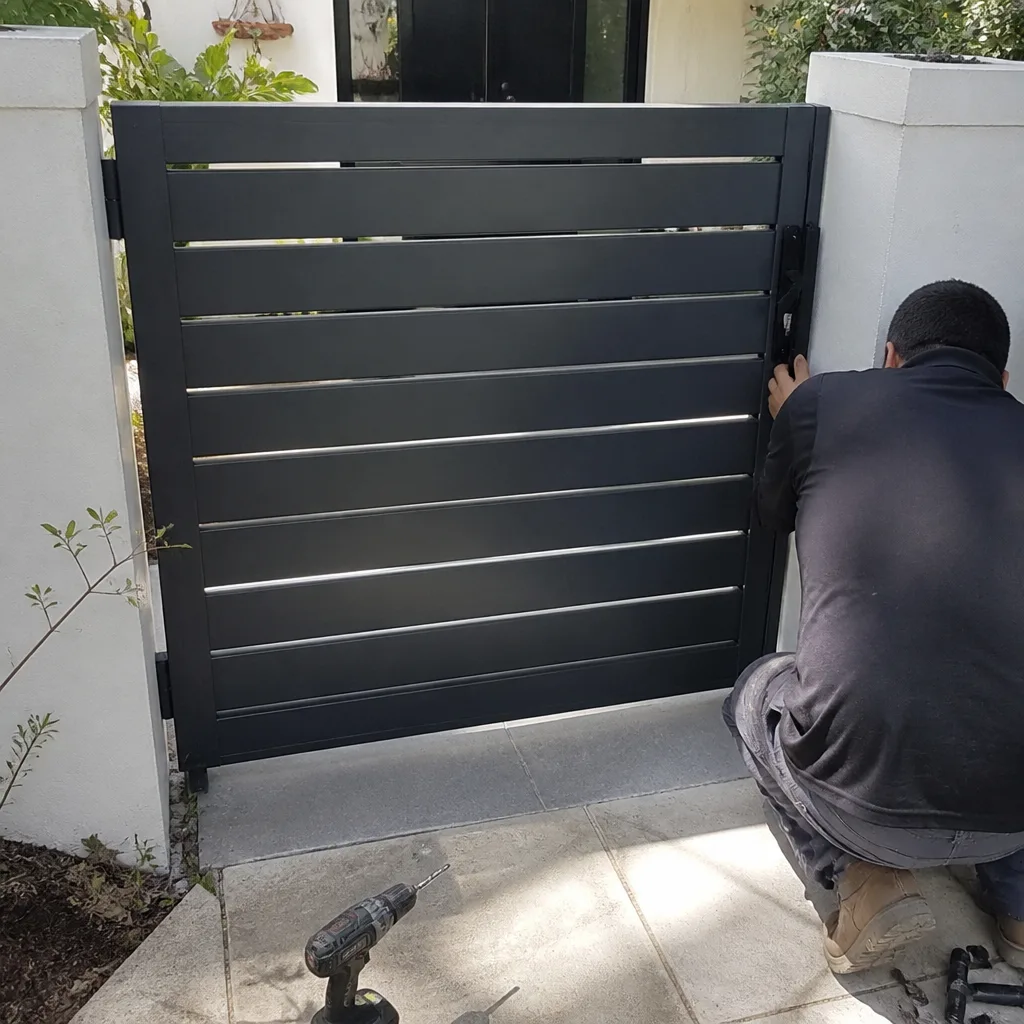 After
After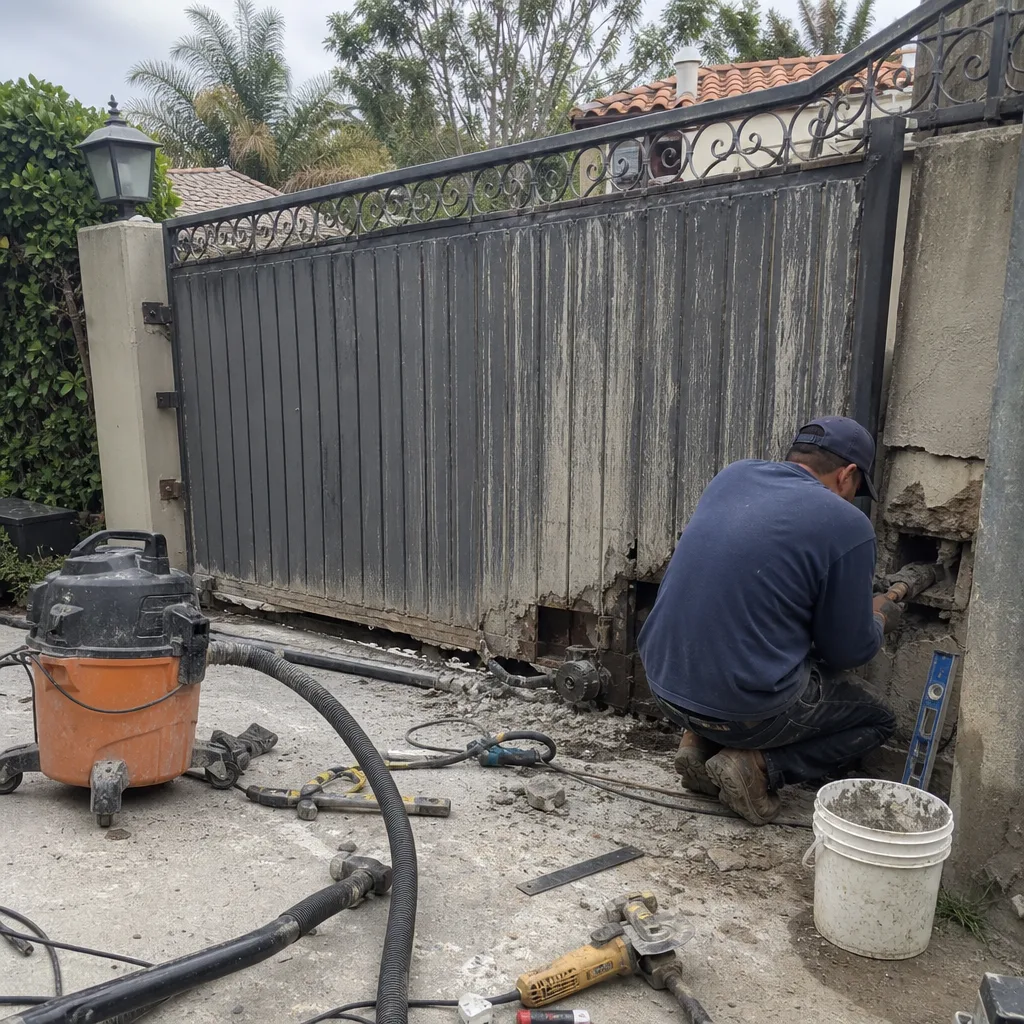 Before
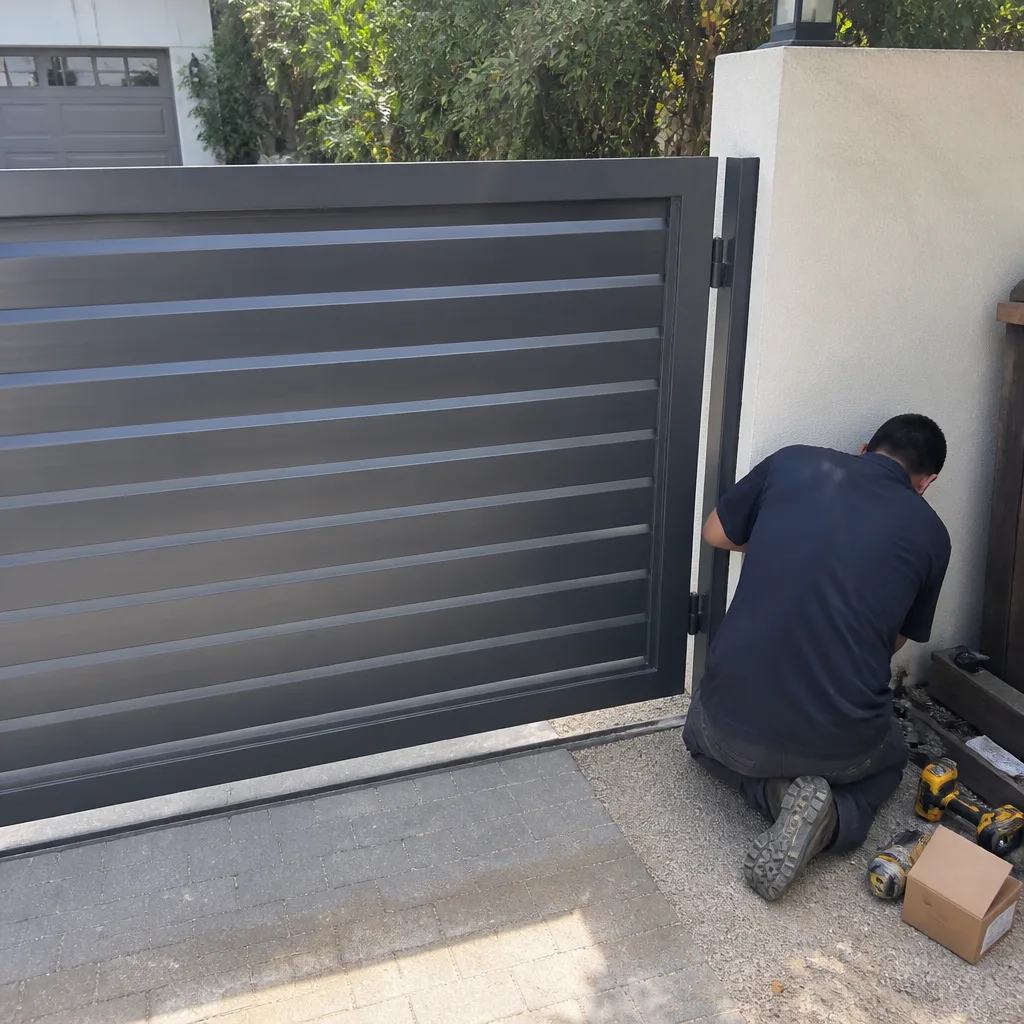 After
AfterGate Repair Permits, Codes & Inspections in CA: What You Need to Know
A Los Angeles County homeowner replaced her entire gate operator – new motor, new control board, new safety sensors – without a permit. The installer said it wasn’t required. Two years later, during a property sale, the buyer’s inspector flagged the installation as unpermitted work. The cost to remediate exceeded the original repair. This guide, alongside our Gate Repair Warning Signs: A Tarzana Homeowner’s Reference Guide, exists because that scenario plays out across Tarzana, Encino, Woodland Hills, and every other neighborhood in the San Fernando Valley with alarming regularity. We’ll cover exactly when a California gate repair needs a permit, what inspectors actually check, and how to protect yourself before, during, and after the work.
Quick Answer
In California, gate repair permits hinge on scope, not cost. A $200 repair that requires running a new electrical circuit or modifying the gate’s structural frame will likely need a permit, while a $1,500 motor swap that uses the existing wiring and mounting points often will not. The governing rules come from the California Building Code (CBC), the California Electrical Code (CEC), and UL 325 safety standards for automated gates. When in doubt, ask your contractor to put the permit determination in writing before work begins.
Table of Contents
- The Real Permit Triggers for Gate Work in California
- Repair vs. Replacement: The Distinction That Determines Everything
- What an Inspection Actually Checks: The Three UL 325 Tests
- How Unpermitted Gate Work Affects a Property Sale in Los Angeles County
- How to Ask a Contractor About Permits (And What a Correct Answer Sounds Like)
- Local Variations: LA County, Tarzana, and Neighboring Cities
- What Documentation You Should Walk Away With
- Common Mistakes to Avoid
- When to Call a Professional
- Frequently Asked Questions
- The Bottom Line
BeforeAfterThe Real Permit Triggers for Gate Work in California
Most people assume permit requirements are tied to project cost. That assumption is wrong, and it costs homeowners real money. The California Building Code, adopted with local amendments by the Los Angeles Department of Building and Safety (LADBS), ties permit triggers to the physical nature of the work, not its price tag. Here are the actual triggers:
- New electrical circuits. Running power from your panel to a gate operator means adding a circuit. Under the California Electrical Code, that requires an electrical permit. This is true whether the wire runs three feet or thirty feet. If your gate currently has no power and you’re adding an automated opener for the first time, a permit is almost certainly required.
- Structural modifications. When the gate’s post, hinge mounting, steel frame, or concrete footing is altered to carry a different load, it crosses into structural territory. Cutting a steel post, pouring a new footing, extending a masonry column, or modifying the gate leaf to accommodate a heavier operator falls here. In Tarzana and throughout the Valley, this trigger frequently applies when a homeowner replaces a lightweight wood gate with a heavy steel one and tries to reuse the existing hinges and posts.
- UL 325 safety-device additions or changes. The UL 325 standard governs automated gate safety in all 50 states. When you add photo-eyes, contact edges, or a new control board programmed with different safety logic, you are altering the gate’s safety compliance profile. Some jurisdictions treat this as a repair; others treat it as a modification that needs inspection. LA County consistently requires that safety device work on gates serving multi-tenant properties (some HOAs, some commercial lots) carry documentation.
- Height and setback changes. Raising a gate’s height, widening an opening, or moving the gate’s set-back from the property line can trigger zoning review, which is a planning permit separate from a building permit. This matters in Tarzana neighborhoods like Melody Acres or the hillside lots south of Ventura Boulevard, where front-yard setbacks are already tight.
What does not trigger a permit? Replacing a failed limit switch, swapping a capacitor on an existing motor, realigning a photo-eye, resoldering a broken wire splice inside an existing junction box, replacing worn hinge bearings with identical hardware, or installing a new battery in a solar-powered operator. These are repairs, not modifications. The line is between restoring function and changing the system.
One more thing: some gate work in LA County requires a permit even when no building permit is required – because the gate sits within a designated hillside overlay, a historic district, or an HOA with its own architectural review. A reputable Gate Repair in Tarzana company will check these layers before quoting a scope.
Repair vs. Replacement: The Distinction That Determines Everything
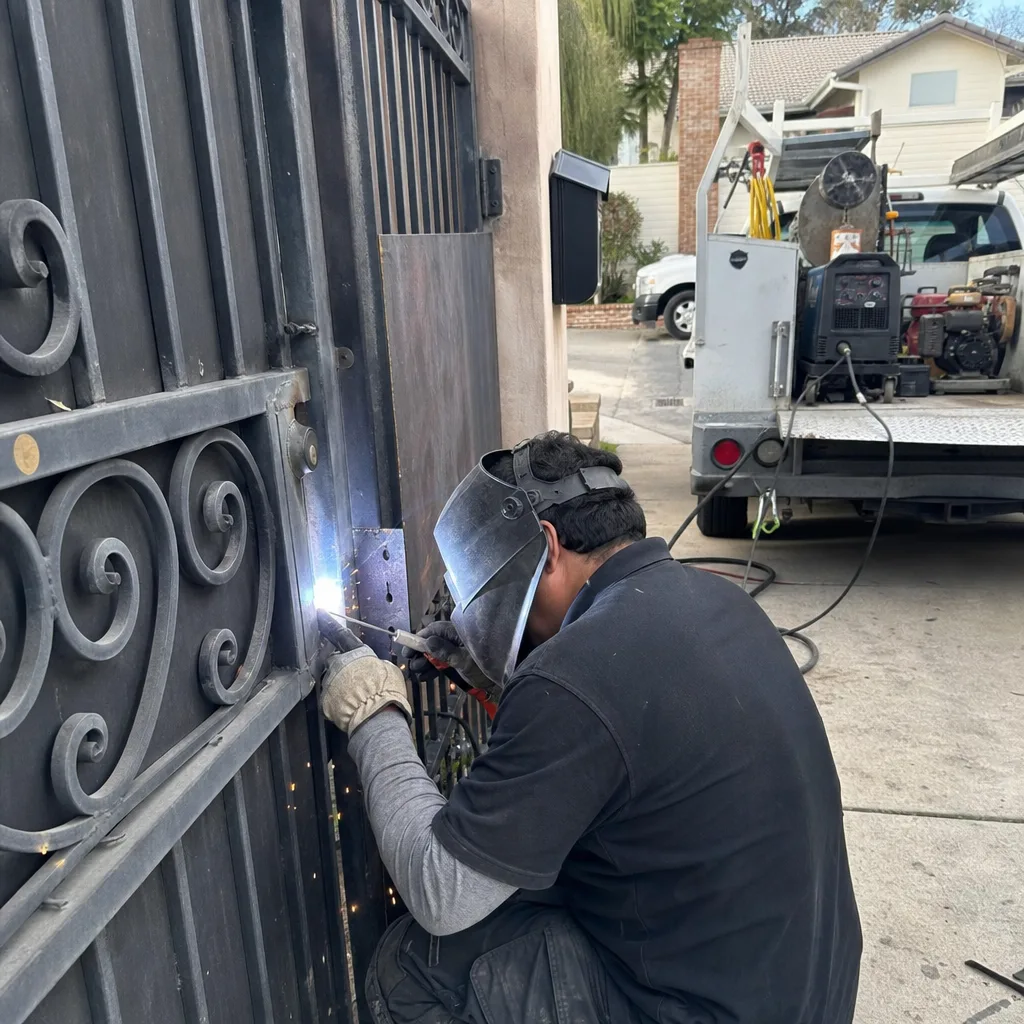
The word “replacement” sounds bigger than “repair,” which is why homeowners routinely assume a motor replacement needs a permit and a small wiring repair does not. In practice, the opposite is often true. Let’s break it down with concrete examples.
What counts as a repair (no permit in most cases):
- Replacing a failed capacitor, relay, or limit switch on an existing gate operator
- Swapping a worn drive belt or chain on a sliding gate using the existing sprockets and mounts
- Realigning or cleaning a photo-eye that has drifted or been obstructed
- Replacing a damaged length of low-voltage wire between the operator and a keypad, using the same wire type and the same conduit or chase
- Welding a cracked hinge back to its original position without changing the load path
- Replacing a remote control receiver or keypad with an equivalent unit that uses the existing wiring
What counts as a replacement (permit may be required):
- Swapping a swing-gate operator for a slide-gate operator, which changes the foundation, the load, and the safety-device layout
- Replacing a gate leaf with a significantly heavier one – say, going from a 180-pound steel frame to a 350-pound solid panel – because the hinge posts and operator now carry a new load
- Installing an operator where none existed before, because that means a new branch circuit
- Moving the gate opening, changing its width, or changing its height
- Replacing a wood post with a steel post of different dimensions, drilled into new concrete
Here’s the counterintuitive part we explain to homeowners in Tarzana regularly: if you’re swapping a failed DoorKing slide operator for a new DoorKing unit of the same model, mounted to the same pad, using the same conduit and wire gauge, you’re typically in repair territory – even though the invoice reads “motor replacement.” But if that same job requires running a new 20-amp circuit because the old one was never sized correctly, the entire job now carries a permit trigger.
In our experience, the homeowners who get into trouble are the ones who approve work based on price alone and never ask the scope question. A written scope tells you whether the contractor is treating the job as repair or replacement. That distinction is worth more than any discount.
What an Inspection Actually Checks: The Three UL 325 Tests
If your gate work does trigger a permit, the inspector will run through a specific set of checks before signing off. These come from UL 325, the national safety standard for automated gates, and from the LADBS field inspection checklist. You don’t need to memorize the standard, but you should know what the inspector will look at so you can verify the work before they arrive.
The three core tests are:
- The entrapment-sensor response test. The inspector will block the gate’s path mid-travel and observe how the operator responds. If the gate has contact edges (the rubber strips that stop the gate when they feel pressure), the inspector triggers them. If it has photo-eyes (the infrared beams that stop the gate when something crosses the path), the inspector breaks the beam. In both cases, the gate must stop and reverse within two seconds. It cannot continue closing. This test is run at multiple points along the gate’s travel. We tell customers in Tarzana that if their gate fails this test at any point, it fails the inspection period.
- The secondary-entrapment-device test. UL 325 requires a minimum of two independent entrapment-protection devices on most automated gate configurations. One is typically inherent to the operator (the motor’s internal obstruction sensing, which reads current draw and reverses when resistance spikes). The other is external: a photo-eye, a contact edge, or both. The inspector will disable or simulate failure of the primary device and confirm the secondary device still stops and reverses the gate. This is the test that catches a lot of DIY and low-bid installations, because running two properly wired safety devices to a common control board takes more time than one.
- The warning-sign verification. The inspector checks that permanent warning signage is affixed to both sides of the gate. The signs must be legible, mounted at eye level, and state the specific hazard (“Automatic Gate – Keep Clear” or similar). The inspector is not checking for a particular brand of sign, but it must be present on both sides and visible from the approach. We photograph these during our Gate Installation in Tarzana projects so the record is there if a follow-up inspection is ever requested.
Beyond the UL 325 tests, an LADBS inspector will also check the electrical work: junction box covers, grounding, conduit where required, and breaker sizing. If the work included a new circuit, the electrical inspection happens first, followed by the final building inspection for the gate itself.
One practical suggestion: before the inspector arrives, run the entrapment tests yourself. Block the gate with a cardboard box and see what happens. If the gate crushes the box, you have a problem that the inspector will definitely find. Better to fix it on your schedule than to fail the inspection and pay for a re-inspection fee.
How Unpermitted Gate Work Affects a Property Sale in Los Angeles County
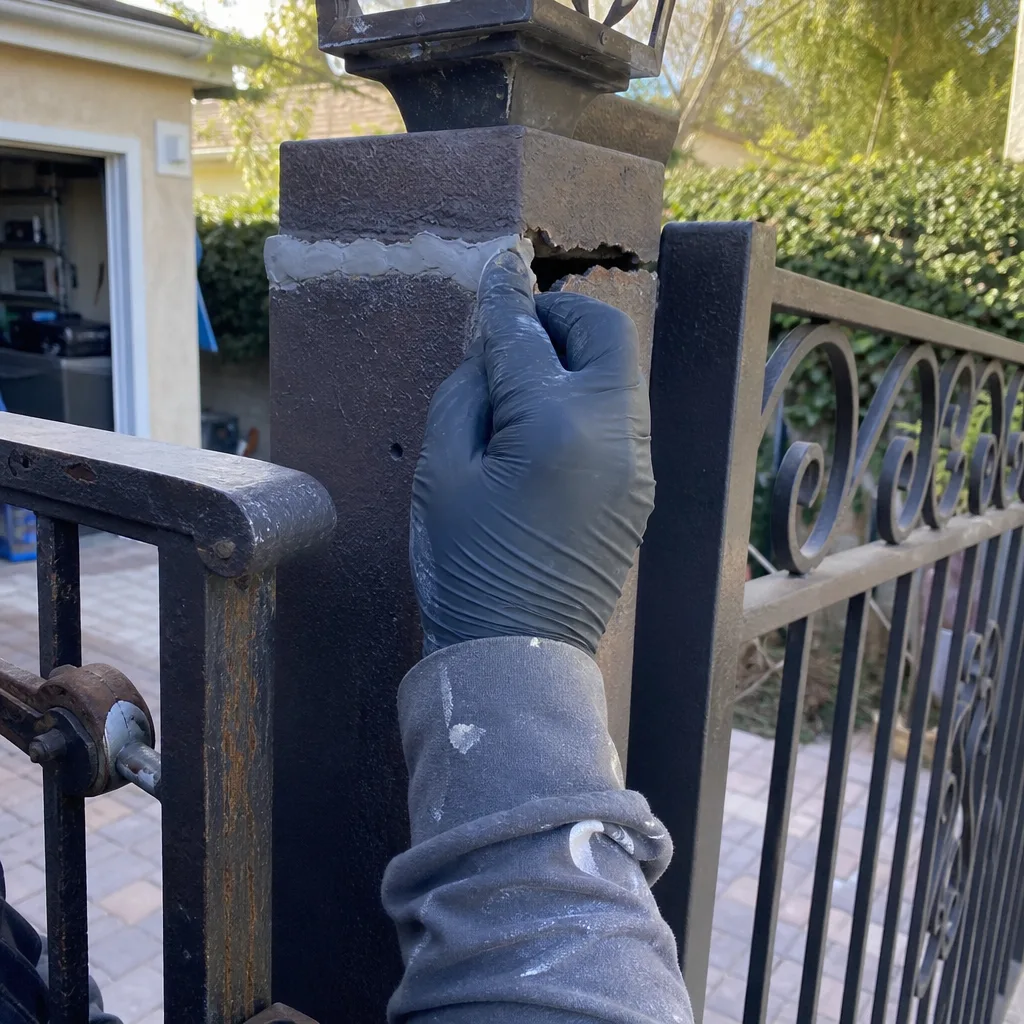
California is a strong disclosure state. Sellers must disclose known unpermitted work on the Transfer Disclosure Statement, and increasingly, buyers’ inspectors are trained to look for exactly this kind of issue. Automated gates are on their checklist because gate work sits at the intersection of electrical, structural, and safety code – three places where unpermitted modifications are common.
Here’s what happens, step by step, when unpermitted gate work surfaces during a sale in Los Angeles County:
- The buyer’s inspector flags it. The gate is noted as “possible unpermitted modification” or “automated gate without visible permit record.” This goes in the inspection report.
- The buyer’s agent requests disclosure. Under the standard California Residential Purchase Agreement, the seller is asked to produce permits for any work the inspector questions. If no permit exists, the seller has a problem.
- The property enters negotiation. The buyer typically requests one of three outcomes: the seller obtains a retroactive permit and passes a final inspection before close, the seller credits the buyer for estimated remediation costs, or the seller reduces the price. In a normal market, the credit or price reduction is usually larger than the original permit and inspection would have cost.
- Worst case, the sale dies. Some lending programs will not fund a property with known unpermitted electrical modifications until they are remedied. If the buyer can’t get a clear loan condition, the deal collapses. We’ve seen this happen to a seller in Tarzana whose buyer’s lender required LADBS sign-off on an unpermitted gate operator installed four years prior.
The math is simple. A permit and inspection on a typical gate operator replacement in the Valley might run a few hundred dollars in fees and take two to three weeks. The cost of remediating that same work during escrow – including retroactive fees, potential penalties, and a buyer’s leverage – is almost always higher. And on some hillside lots in Tarzana, where the gate sits within a slope overlay, the retroactive approval process is significantly more involved than it would have been up front.
If you already suspect your gate carries unpermitted work, the remedy is not to ignore it until you sell. LADBS has a process for retroactive permits, and a licensed contractor can guide you through it. The sooner it’s resolved on your terms, the cheaper it is.
How to Ask a Contractor About Permits (And What a Correct Answer Sounds Like)
This is the part most homeowners skip. They assume the contractor “knows” about permits, so they don’t ask. That assumption is the root of most unpermitted gate work. Here is the question to ask, word for word:
“Does the scope you’re proposing require a permit under the California Building Code and LADBS, and will you put that determination in writing?”
A correct answer sounds something like this: “No permit is required for this scope because we’re replacing the operator with an equivalent unit using the existing circuit and mounting points. Here’s what we’re doing, and here’s why it doesn’t trigger a permit. I’ll put that in the written scope.” That answer takes thirty seconds to deliver and shows the contractor has actually thought about the distinction. Some guys who service Viking or Linear openers exclusively will tell a customer that any motor swap on that brand is a repair, never a replacement. That may be true on a specific job, but the minute you run new wire or move a post, it stops being true. The honest contractor tells you when the line is crossed.
A wrong answer sounds like this: “You don’t need a permit for gate stuff. It’s a repair. Nobody pulls permits for gates.” That is not a professional statement. It’s a dismissal, and it’s often wrong.
Here’s a quick checklist for the conversation:
- Ask whether the proposed scope requires a permit.
- Ask whether the work includes any new electrical wiring or circuit changes.
- Ask whether the work changes the gate’s structure, footings, or weight.
- Ask whether UL 325 safety devices will be added, removed, or substantially modified.
- Ask for the permit determination in writing, attached to the written quote.
In Tarzana, we put the permit determination directly in the written scope we hand over before work begins. It’s not a verbal assurance. It’s a line item. If a permit is required, the scope identifies it and the price includes the permit fee and the inspection coordination. If a permit is not required, the scope states the reason in plain English. That’s what a correct answer looks like on paper.
Local Variations: LA County, Tarzana, and Neighboring Cities
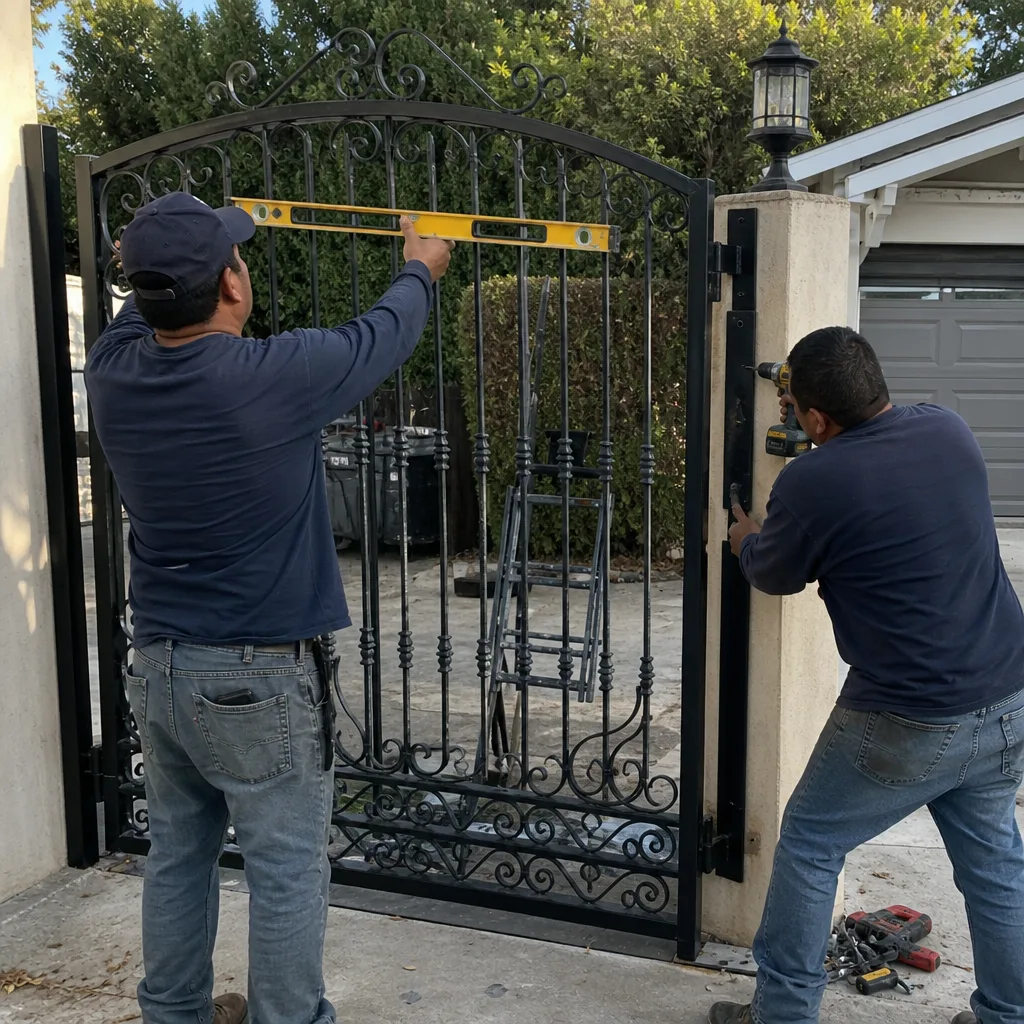
California’s building code is a state adoption, but enforcement varies by jurisdiction. Los Angeles County (unincorporated areas), the City of Los Angeles (including Tarzana), and the incorporated cities that ring the Valley each have their own amendments and their own inspection culture.
- City of Los Angeles. Tarzana falls under LADBS. Gate work that triggers a permit requires plan review for structural changes, over-the-counter permits for most electrical additions, and field inspection for UL 325 compliance. LADBS inspectors in the Valley are generally thorough on automated gates because entrapment liability falls on the property owner, and they know it.
- Los Angeles County unincorporated areas. Neighboring communities like parts of Topanga and some hillside pockets use the County’s building division. The code is similar, but the inspection scheduling and fee structure differ. County inspectors tend to be especially careful with gates on shared driveways or multi-parcel access roads, because the liability question is messier.
- Burbank, Glendale, and Calabasas. These adjacent cities have their own building departments with their own amendment packages. Burbank, for example, has historically been stricter about front-yard height and setback along certain corridors. If you live in one of these cities and your gate is visible from the street, the planning review may be part of the permit even when the gate itself is a repair.
- HOA layers. Many Tarzana neighborhoods sit within HOAs that impose their own architectural review on gate work, regardless of city permit requirements. A gate paint color change might not need a city permit, but it may need HOA approval. A gate operator replacement that triggers no LADBS permit may still require HOA documentation because it changes the appearance or operation of the entry.
The practical point is this: permit requirements are not uniform across the Valley, and a contractor who works mostly in one jurisdiction may not know the nuances of another. If your gate sits in Tarzana proper, the City of Los Angeles rules apply. If it sits just outside the line, the rules shift. A Gate Motor & Opener in Tarzana service call should start with the contractor confirming which jurisdiction applies to your address.
What Documentation You Should Walk Away With
Permits and inspections produce paperwork. Repairs should too. If your gate work – permitted or not – leaves no paper trail, you have no way to prove what was done if a question comes up later, and that’s where professional our Gate Repair services differ from casual labor. In our experience, this is the second-biggest gap in the gate repair industry after verbal estimates.
Here’s what a documented gate repair should leave on your kitchen counter:
- A written scope. What was proposed, what was actually done, and why. The language should be specific enough that a different technician could pick it up in six months and understand the job. “Replaced limit switch on Viking operator, set travel 8 degrees past the stop, verified photo-eye alignment” is documentation. “Fixed gate” is not.
- A photo record. At minimum, photos of the area before work, the components that were replaced or adjusted, and the final configuration. If safety devices were involved, photos of them in their final position. These photos settle disputes, help future technicians, and serve as evidence if an insurance question arises.
- Permit documentation, when applicable. The permit number, the inspection date, and the final sign-off. If the work is unpermitted but a permit was determined not to be required, a written statement of that determination, with the reason, is your documentation.
- Part numbers and brands. If a Ghost Controls receiver or a Linear control board was installed, the part number should be written down. A year later, when a different company services the gate, that part number saves a diagnostic hour.
None of this is complicated. It’s a documentation habit, not a technology. But it’s the habit that separates a professional gate service from a guy with a truck and a multimeter. When a Tarzana homeowner asks us what they’re paying for on a repair, part of the answer is the record they get to keep.
Common Mistakes to Avoid
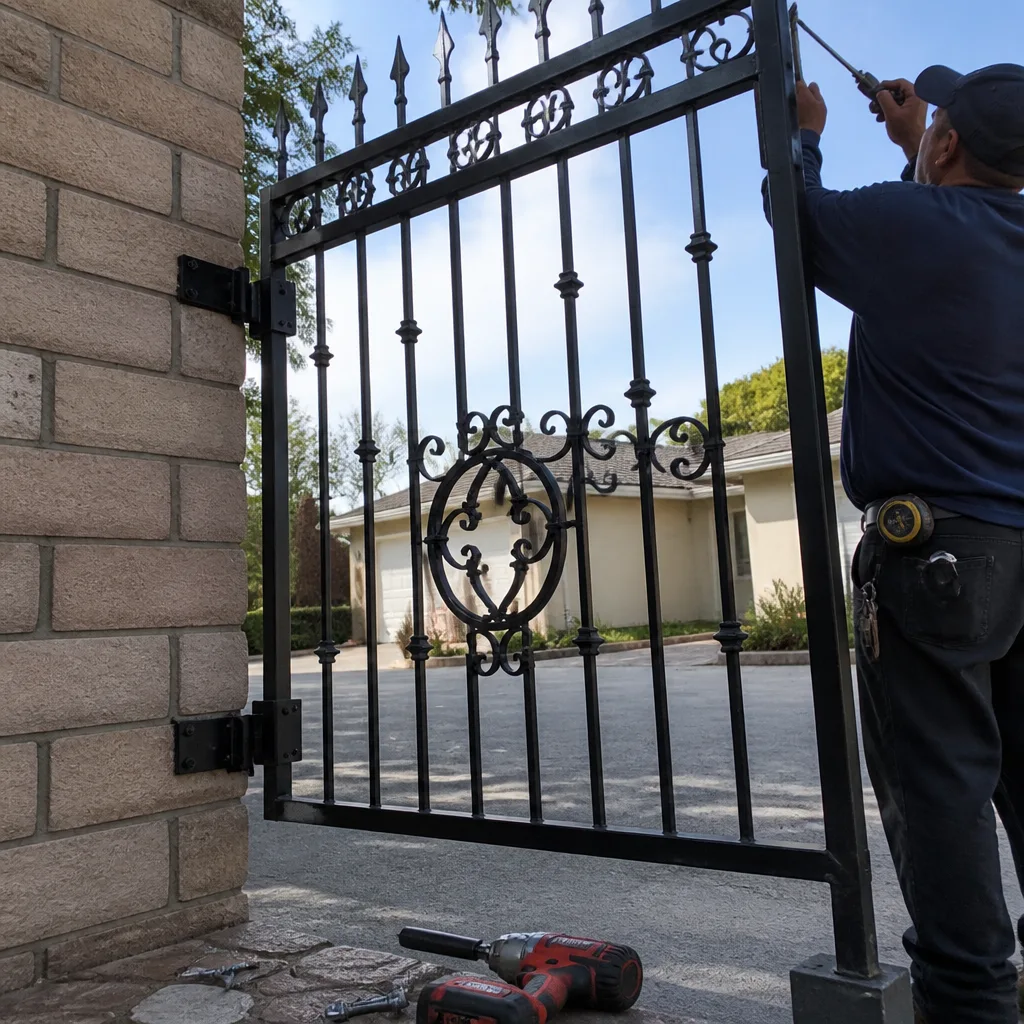
- Assuming cost determines permit need. We’ve covered this, but it bears repeating. A $1,500 motor swap may need no permit, while a $200 circuit extension does. Focus on scope, not cost.
- Accepting a verbal “no permit needed” without a written reason. The contractor who can’t write down why a permit isn’t required may not actually know. Get it in writing.
- Reusing existing mounting hardware for a heavier gate. In Tarzana, where many homes are replacing 30-year-old wood gates with steel ones, this is probably the most common structural shortcut we see. The posts and footings may have been marginal for the old gate and are now dangerously undersized for the new one. This is exactly the kind of modification that triggers a permit – and often for good reason.
- Skipping the entrapment tests because “the gate seems fine.” A gate can operate for years with a misaligned photo-eye or a dead contact edge. The first time it fails is when something is in the path. The UL 325 tests exist because entrapment injuries are real and the liability falls on the property owner.
- Running new electrical wire without pulling an electrical permit. This is the single most common unpermitted work we find on gate systems in the Valley. The gate works, so the homeowner never questions it. Then the sale comes, the inspector sees a new circuit on the panel, and there’s no permit on file. The clock starts on remediation under escrow pressure.
- Failing to check HOA requirements. In Tarzana’s HOA communities, gate work can violate architectural guidelines even when it’s perfectly code-compliant. The city fine and the HOA fine are two different fines.
- Keeping the old operator when the gate’s weight class increased. If the new gate is heavier, an operator rated for the old gate’s weight is now undersized. The motor will work harder, wear faster, and may not reverse reliably under load. Weight class matters more than brand.
When to Call a Professional
Some gate work is genuinely simple, and a capable homeowner can handle it: cleaning a photo-eye, lubricating a chain, tightening a loose hinge bolt, replacing a keypad battery. But the moment the work touches high-tension springs, a live electrical circuit, a structural mounting point, or a UL 325 safety device, you want a trained professional on site. Gate springs and counterbalance cables carry stored energy that can cause serious injury if released incorrectly. Electrical wiring on an automated gate carries the same risk as any branch circuit. And a gate that fails to reverse when it should is a liability claim waiting to happen.
If your gate work requires a permit, or you’re not sure whether it does, or you’ve been told it doesn’t but the explanation doesn’t hold up, get a second opinion. Vance Gate Repair Tarzana home service includes free estimates in Tarzana and throughout the Valley. We’ll tell you in writing whether your proposed scope triggers a permit, and we’ll stand behind the documentation. Call (424) 258-8818.
Frequently Asked Questions
It depends entirely on scope. Repairs that restore existing function – replacing a limit switch, swapping a capacitor, realigning a photo-eye, resoldering a splice – typically require no permit. Work that adds a new electrical circuit, modifies the gate’s structure, or changes its UL 325 safety configuration may require one. The distinction is not about cost; it’s about what physically changes. Call (424) 258-8818 for a written permit determination on your specific scope.
LADBS permit fees for typical residential gate work (electrical additions, structural changes, safety-device modifications) generally range from $150 to $600 for the permit itself, plus inspection fees and any plan review. The exact figure depends on the scope and the project valuation LADBS assigns. The cheapest way to know is to have a contractor price the permit into a written quote up front. Estimates from Vance Gate Repair Tarzana are free and include the permit line item when one applies.
You can sell it, but you must disclose the unpermitted work, and the buyer’s inspector will likely flag it. Most buyers request remediation, a credit, or a price reduction, and some lenders will not fund the loan until the gate work is permitted and inspected. The cost of retroactive compliance almost always exceeds what the original permit would have cost. If you’re in Tarzana and need to resolve unpermitted gate work before a sale, call us to review the scope and chart the remediation path.
UL 325 requires automated gates to have at least two independent entrapment-protection devices on most configurations, warning signage on both sides of the gate, and proper installation of photo-eyes and contact edges to prevent entrapment injuries. Inspectors test these devices during a final inspection by simulating obstructions and verifying the gate stops and reverses within two seconds.
Replacing a gate motor with an equivalent unit using the existing circuit and mounting points is typically classified as a repair and requires no permit. If the replacement requires new electrical wiring, a new circuit, a different foundation or mounting configuration, or a change in the gate’s weight class, a permit may be required. The key question is whether the new motor changes the system or merely restores it. Get the determination in writing.
Yes, when the gate work includes a new branch circuit or any modification to the existing circuit feeding the operator. The electrical permit is typically issued through LADBS and requires a rough-in inspection before the final gate inspection. In Tarzana, homes built before the 1990s often have gate circuits that were never permitted to begin with, so any modification to those circuits requires careful documentation.
The Bottom Line
California gate permits are a scope question, not a cost question. The homeowner who understands that distinction can confidently approve a $1,500 motor repair and, just as confidently, insist on a permit for a $200 circuit extension. The three things to remember: know whether your work is repair or replacement, ask for the permit determination in writing before work starts, and keep documentation of every job – permitted or not – because the property sale is where unpermitted gate work eventually surfaces. In Tarzana and throughout Los Angeles County, the cheapest permit is the one pulled before the work is done. For more guides & resources on protecting your property, see our blog. The most expensive one is the one pulled under escrow pressure.
Written by Adrian Vance, Owner at Vance Gate Repair Tarzana, serving Tarzana since 2014.